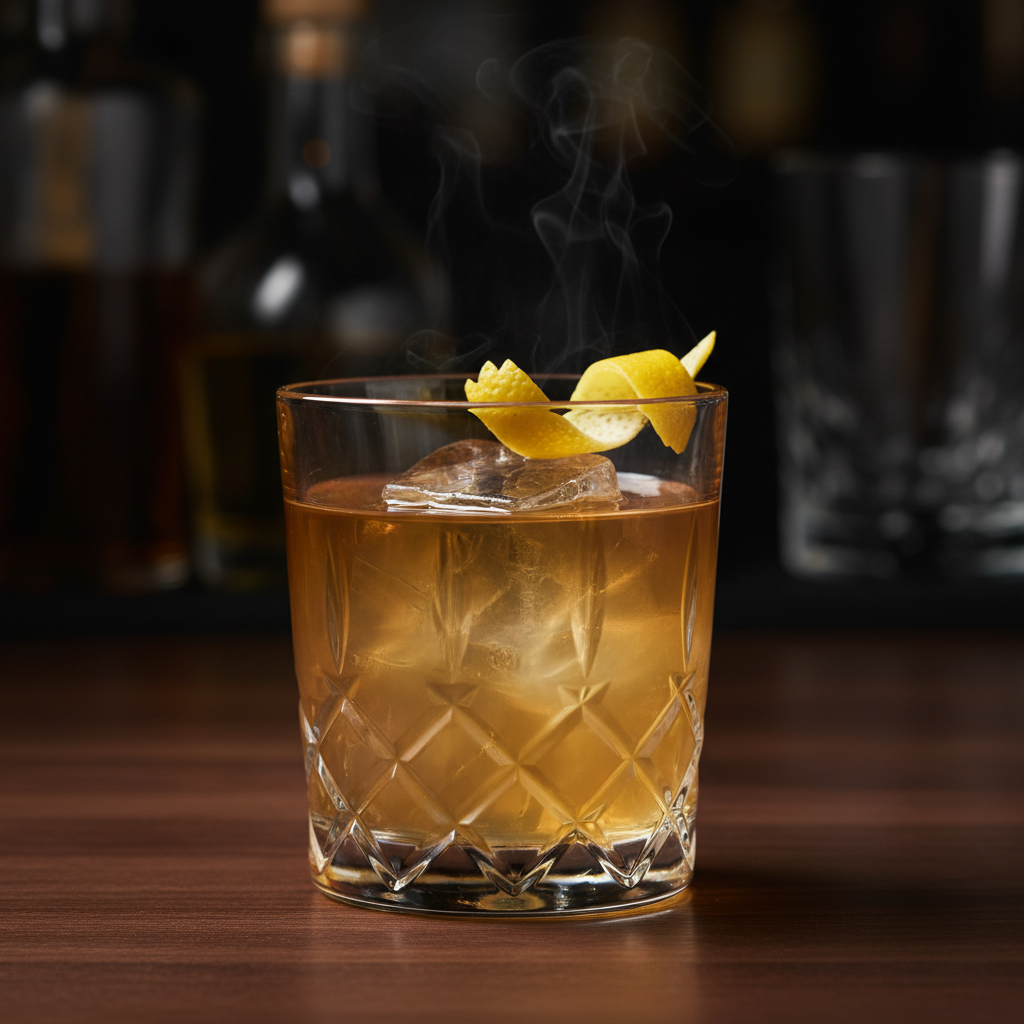
The cocktail world does not produce genuine classics very often. Most drinks that get called “modern classics” are really just popular recipes that circulated for a few years before fading. The Penicillin is different. Created in 2005 at Milk and Honey in New York by bartender Sam Ross, it has earned a place in the permanent canon in under two decades - faster than almost any drink in history. If you have not made one yet, this is the guide to understanding why it matters and how to get it right.
Where the Penicillin Came From
Sam Ross was working at Milk and Honey, the legendary lower Manhattan bar founded by Sasha Petraske, when he developed the Penicillin. The bar was already known for its strict house rules and its commitment to technique - it was one of the places that helped define the craft cocktail revival of the early 2000s.
Ross was riffing on the Whiskey Sour template: a spirit, a citrus element, and a sweetener. He took a blended Scotch whisky as the base, used fresh lemon juice for the citrus, and built a honey-ginger syrup to do the work of simple syrup. Then he added the detail that makes the Penicillin genuinely original: a float of Islay single malt Scotch poured over the back of a bar spoon so it sits on top of the drink rather than mixing in.
That float is everything. It means the first thing you smell and taste is the smoke from the Islay whisky - the peat, the brine, the intensity. Then as you drink through it, the honey and lemon and the softer blended Scotch come forward. The drink changes as you consume it. That kind of layered experience is rare.
What Goes Into a Penicillin
The ingredient list is short, but each component is doing specific work.
Blended Scotch whisky forms the base. The choice of blended rather than single malt is intentional - blended Scotch is approachable, slightly sweet, and does not compete with the Islay float. Something like Johnnie Walker Black or Famous Grouse works well. You want a base that is present but not dominant.
Fresh lemon juice provides the acid. As with any sour-style cocktail, fresh is non-negotiable. Bottled lemon juice is flat and slightly bitter in a way that throws off the balance. Squeeze it to order.
Honey-ginger syrup is the sweetener and the soul of the drink. You make it by combining honey with water and fresh ginger, heating gently to infuse, then straining. The ratio matters - too much ginger and it overwhelms; too little and you lose the warmth that makes the drink interesting. A standard approach is equal parts honey and water with a generous amount of fresh ginger, simmered for a few minutes and left to steep before straining. The syrup keeps in the fridge for a couple of weeks.
Islay single malt Scotch is the float. Laphroaig and Ardbeg are the most commonly used. Both are heavily peated, which is the point. You only use about a quarter ounce, but it defines the drink’s character completely.
Ice matters here as it does in every cocktail. You shake the base ingredients with ice to chill and dilute, then strain into a rocks glass over a large ice cube. The large cube slows dilution and gives you a clean surface to float the Islay Scotch over.
The Technique: Floating Scotch Over a Spoon
The float is the part that intimidates people, but it is straightforward once you understand what you are trying to do.
After you have shaken and strained the base into your glass, hold a bar spoon just above the surface of the drink with the back of the spoon facing up. Pour the Islay Scotch slowly over the back of the spoon. The spoon disperses the liquid gently so it lands on top of the drink rather than sinking through it. Scotch is slightly less dense than the honey-sweetened base below, which helps it stay on top.
The goal is a visible layer - you should be able to see the slight color difference between the float and the drink beneath it. It does not need to be a perfectly defined line. A gentle gradient is fine. What you want to avoid is pouring the Islay directly into the glass and having it mix in immediately, which collapses the whole point of the technique.
If you do not have a bar spoon, the back of a regular spoon works. The principle is the same.
Why the Penicillin Spread So Quickly
Most cocktails that originate at a single bar stay at that bar, or at least stay in that city. The Penicillin went global. There are a few reasons for this.
The flavor profile is genuinely accessible. Honey and lemon are familiar. The blended Scotch base is not challenging. The Islay float adds drama without requiring the drinker to already love heavily peated whisky - the smoke is present but contained, and it softens as the drink warms slightly. It is a cocktail that works for people who think they do not like Scotch.
The technique is also memorable and visual. Watching a bartender float Islay Scotch over a spoon is the kind of thing that sticks with you. It is a small piece of theater that gives the drink a story.
And the name helps. Penicillin is unexpected, slightly funny, and easy to remember. It does not sound like a cocktail, which makes it more interesting than cocktails that sound exactly like what they are.
Making It at Home
The Penicillin is one of the more achievable “impressive” cocktails for a home bar. The only real preparation required is making the honey-ginger syrup in advance, which takes about fifteen minutes and keeps for two weeks. Everything else is standard technique.
A few notes for home production:
The honey-ginger syrup is worth making in a reasonable batch. Once you have it, you will find yourself using it in other places - it works in a hot toddy, in a Dark and Stormy variation, or just in tea. Do not make a tiny amount and then have to make it again the next day.
For the Islay float, start with Laphroaig 10 if you do not already have an Islay Scotch. It is widely available, affordable relative to the category, and has exactly the kind of aggressive peat and brine character that makes the float work. A small bottle goes a long way since you are using a quarter ounce per drink.
Chill your glass before you build the drink. A rocks glass pulled from the freezer or filled with ice water for a minute will keep the drink colder for longer and slow down the dilution from the large cube.
The Penicillin in Alchemy
The Penicillin is part of Alchemy’s Pro recipe collection - one of the modern classics that rewards the kind of home bartender who wants to go beyond the standards. The full spec in the app includes the honey-ginger syrup ratio, the exact float technique, and notes on which Islay expressions work best and why.
If you are building out a home bar that can handle the Penicillin, you are probably already thinking about the other drinks that share its DNA - the Whiskey Sour family, the Scotch-forward stirred classics, the drinks that reward a little extra preparation. Alchemy’s My Bar feature will surface what you can make from what you already have on your shelf, which is a useful way to discover that you are closer to a full Penicillin setup than you might think.
A Drink Worth Understanding
The Penicillin is not a complicated cocktail. The ingredient list is short, the technique is learnable in one or two attempts, and the flavor payoff is immediate. What makes it worth studying is the thinking behind it - the way Ross used the float to create a drink that changes as you consume it, the way the honey-ginger syrup does more work than simple syrup ever could, and the way the whole thing holds together as a coherent idea rather than a collection of interesting ingredients.
That kind of intentional construction is what separates a great cocktail from a good one. The Penicillin has it. Make it once and you will understand why it became a classic.