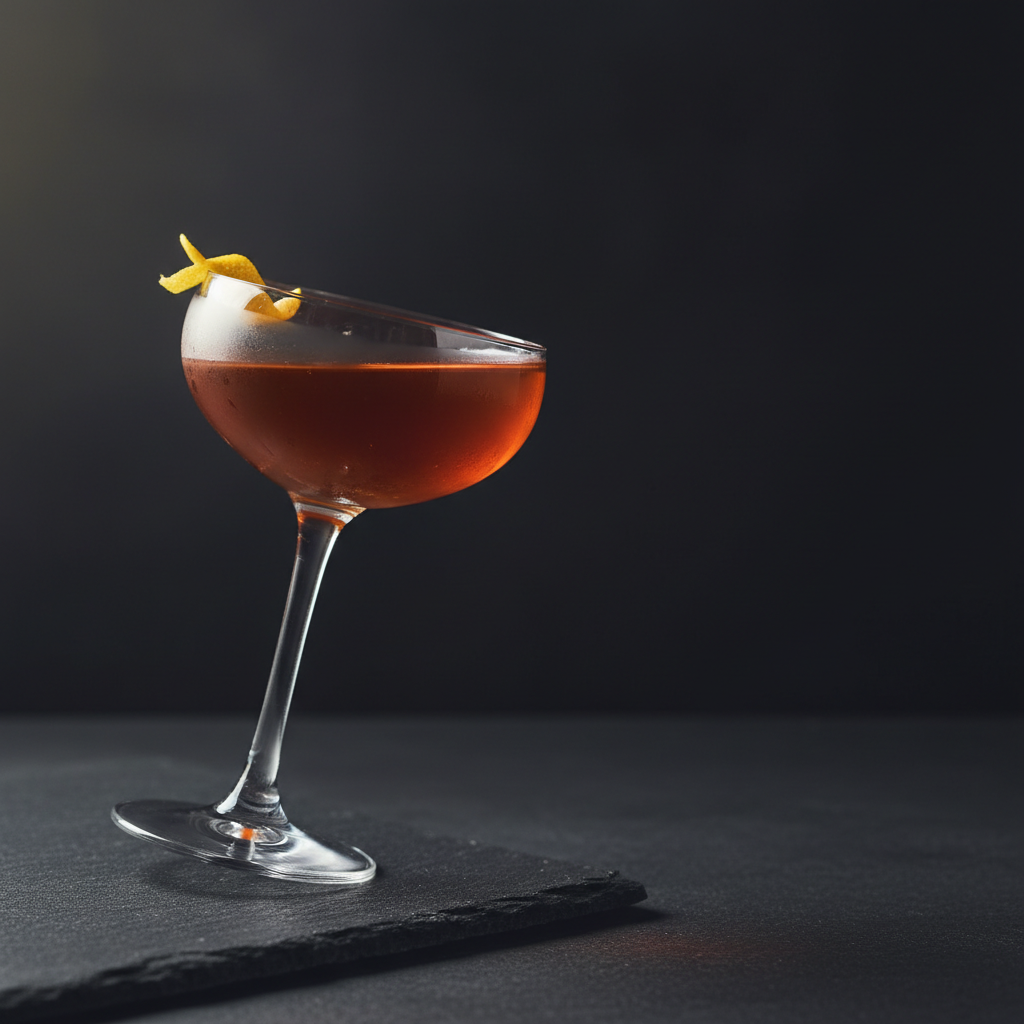
There is a bottle on most serious home bars that gets opened twice and then forgotten. It shows up in a recipe, does its job, and gets pushed to the back of the shelf. That bottle is almost always amaro.
Amaro is a category of Italian herbal liqueur, known for its bittersweet flavor and its role in both classic and modern cocktails.
And it is one that most people never quite get comfortable using.
Which is a shame, because amaro might be the most interesting category of ingredient behind the bar. Not the most essential - that argument belongs to citrus and spirits. But the most interesting. The one with the most range, the most history, and the most potential to change what you can make on any given evening.
If you have ever bought a bottle of Averna for a Paper Plane and then wondered what else to do with it, this is the post for you.
What Is Amaro?
Amaro is Italian for “bitter.” This category of Italian amaro liqueur covers a wide range of spirits made by macerating herbs, roots, flowers, citrus peel, and botanicals in a neutral spirit or wine base, then sweetening the result and often aging it. The exact recipe for any given amaro is usually a closely guarded secret - some formulas are centuries old.
The result is a drink that sits somewhere between a spirit and a medicine. Historically, amari were sold in pharmacies as digestive aids. The bitter compounds in many of the botanicals - gentian root, cinchona bark, wormwood - do have real effects on digestion, which is why the tradition of drinking amaro after a heavy meal persists across Italy and much of Europe.
What this history means for the home bartender is that amaro was designed to be complex. It was never meant to be a neutral background ingredient. Every bottle has a personality.
Why the Category Is So Confusing
The problem with amaro is that “amaro” describes a category, not a flavor profile. Buying a bottle of amaro and expecting it to taste like another bottle of amaro is like buying a bottle of wine and expecting it to taste like every other wine. The category is that wide.
On one end, you have light, approachable amari like Aperol - low alcohol, sweet, gently bitter, with orange and rhubarb notes that make it easy to drink on its own or in a spritz. On the other end, you have Fernet-Branca, which is menthol-forward, intensely bitter, and medicinal in a way that genuinely divides people. Most home bartenders who try Fernet for the first time are not expecting it.
In between those two poles is where most of the interesting cocktail work happens.
A Practical Map of the Category
Rather than listing every amaro on the market, it helps to think in three rough zones based on how they behave in a glass.
These are not strict categories, but they are a useful way to think about the main types of amaro and how they behave in cocktails.
Light and approachable: Amaro Montenegro, Amaro Nonino, and other lower-proof, aperitivo-style amari. These are the most forgiving bottles in the category and the easiest place to start. They tend to be sweeter, lower in alcohol, and built around citrus, floral, and gentle herbal notes.
In cocktails, they work well as modifiers in shaken drinks. A half-ounce can add bitterness and complexity without overwhelming the other ingredients, filling the space that plain sweetener would otherwise leave flat. Montenegro leans into orange peel and vanilla with a rounded, slightly spiced finish, while Nonino brings a lighter, honeyed depth that integrates easily with both citrus and whiskey-based drinks. If you are new to amaro, Montenegro is the most versatile place to start.
Related but not technically amaro: aperitivo liqueurs like Aperol, and aromatized wines like Lillet Blanc, behave similarly in cocktails, which is why they are often grouped alongside this style.
Middle weight: Campari, Cynar, Aperitivo Cappelletti. This is where the category gets genuinely interesting for cocktail making. These are more assertive, more bitter, and often higher in alcohol, with enough structure to define a drink rather than just support it.
Campari is the most famous, it is the backbone of the Negroni, the Jungle Bird, and the Americano, and its combination of bitter orange and herbal complexity is one of the most recognizable flavors in cocktail culture. Cynar, made from artichoke, brings an earthy, vegetal bitterness that works particularly well in stirred drinks. Aperitivo Cappelletti sits slightly lighter than Campari, with a wine base and a softer, more rustic bitterness.
These amari do real structural work in a cocktail. They are not just flavoring agents, they are load-bearing ingredients.
Heavy and complex: Averna, Ramazzotti, Fernet-Branca, and other traditional digestif amari. These are typically darker, richer, and more bitter, designed to be sipped after a meal or used in smaller quantities to add depth and complexity.
Averna has a cola-like sweetness with herbal bitterness underneath, which makes it surprisingly versatile in both stirred drinks and modern riffs. Ramazzotti leans slightly brighter, with orange and baking spice layered over a darker base. Fernet-Branca is its own category within the category, intensely bitter, menthol-forward, and polarizing in the best way.
These are the bottles you reach for when you want to add depth, weight, and a more pronounced bitter edge to a drink, or when you want something to sip slowly on its own after dinner.
If you only remember one thing: You can usually swap amari within the same “weight” category. Montenegro for Aperol, Cynar for Campari (with small adjustments), Averna for Ramazzotti. The drink will change, but it will still work.
How to Use Amaro in Cocktails
Understanding what amaro does in a drink makes it much easier to use confidently.
As a modifier: A half-ounce of Montenegro or Aperol in a sour adds bitterness and complexity without taking over. It fills the space that a plain simple syrup would leave flat.
As a structural ingredient: Campari in a Negroni is not a modifier - it is one of three equal parts, and the drink does not work without it. When an amaro is this central to a recipe, its flavor profile shapes everything else. The gin and vermouth in a Negroni are chosen to work with Campari, not the other way around.
As a finishing accent: A small float of Fernet or Averna on top of a stirred drink adds aromatic complexity that hits before the first sip. This is a technique worth experimenting with once you have a few bottles to work with.
As a digestif: Served neat, slightly chilled, after a meal. This is how most amari were originally intended to be consumed, and it is still the best way to get to know a new bottle. Pour an ounce, sip slowly, and pay attention to what you taste.
The Paper Plane and Why It Matters
If you want one cocktail that shows what amaro can do at its best, the Paper Plane is it.
Created by Sam Ross in 2007, it’s built on a simple equal-parts formula: bourbon, Aperol, Amaro Nonino, and fresh lemon juice. One ounce of each, shaken hard, served up. That’s the entire recipe.
What makes it work is how precisely those ingredients fit together. The bourbon provides body and warmth. The lemon brings acid and brightness. Aperol adds a soft, bitter orange sweetness. And the Nonino is the bridge, adding depth, herbal complexity, and a subtle honeyed richness that ties everything together.
Remove any one of those and the drink falls apart. The amaro isn’t a supporting player here, it’s structural.
It’s also a great example of why equal-parts cocktails are so effective. When everything is in balance by volume, the outcome depends entirely on choosing the right ingredients. There’s nowhere to hide, which is why the combination matters so much.
The full spec is in Alchemy, along with a few variations worth trying once you’ve got the base version down.
What to Buy First
If you are building an amaro collection from scratch, the practical answer is to start with two bottles that cover the most ground.
Campari is the one you probably already have, and if you do not, it should be first. It is the most versatile cocktail amaro in the category. A bottle of Campari opens up the Negroni, the Jungle Bird, the Americano, and a dozen variations. It is also cheap enough that you will not feel guilty experimenting.
Amaro Montenegro is the second purchase. It is approachable enough to drink on its own, gentle enough to use as a modifier in shaken drinks, and interesting enough to reward attention. It is the amaro that converts people who think they do not like amaro.
From there, Averna and Nonino are natural next steps - Averna for stirred, spirit-forward drinks, Nonino for the Paper Plane and anything that needs a lighter touch.
Fernet-Branca is a commitment. Buy it when you are ready.
The Shelf Is Not the Problem
Most home bartenders who have a bottle of amaro sitting unused are not missing a recipe. They are missing a framework for understanding what the bottle does. Once you know that Campari is a structural ingredient, that Montenegro is a modifier, and that Averna adds depth to stirred drinks, the bottle stops being mysterious and starts being useful.
Amaro is not one thing. That is exactly what makes it worth understanding.