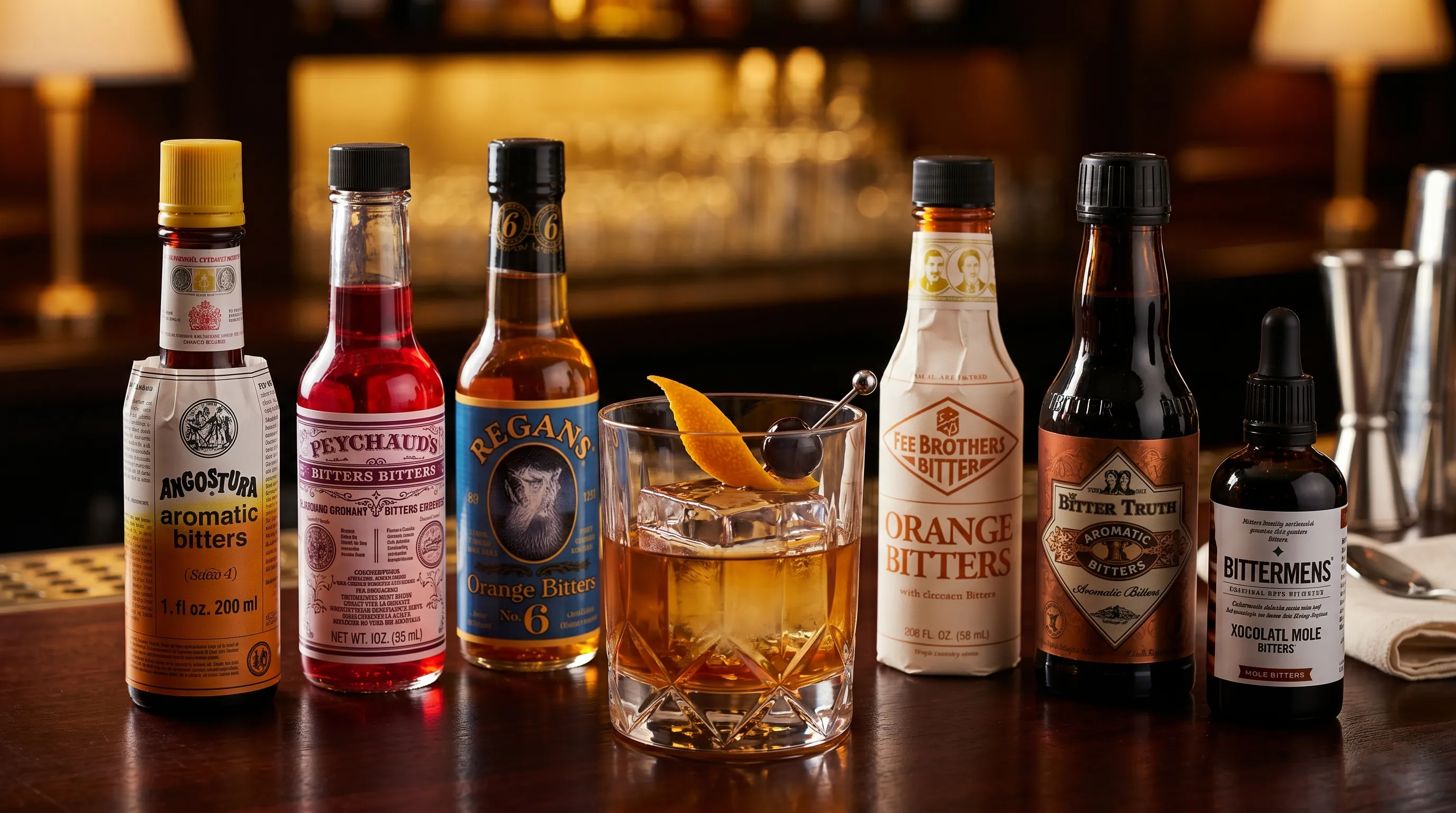
At a glance: Cocktail bitters are concentrated botanical extracts used in tiny amounts to add depth, aroma, and structure to drinks. They are not there to make a cocktail taste aggressively bitter; they work more like seasoning, sharpening sweetness, connecting flavors, and giving classics like the Old Fashioned, Manhattan, Sazerac, and Martini their final shape. Start with aromatic bitters, add orange bitters next, and only expand once you know what each bottle is doing.
The smallest ingredient in a cocktail is often the one people understand least.
A dash or two of bitters does not look important. It barely changes the volume of the drink. You can make an Old Fashioned without it and still have whiskey, sugar, and ice in a glass. You can make a Manhattan without it and still have rye and sweet vermouth. On paper, the drink survives.
In the glass, it does not.
Bitters are one of those ingredients that make more sense by absence than by presence. You notice them most clearly when they are missing. The drink tastes sweet but not shaped, strong but not complete, aromatic but somehow unfinished. Add two dashes, and everything tightens into place.
That is the mistake beginners often make. They see the word bitter and assume the bottle is there to add harshness. But cocktail bitters are closer to seasoning than flavoring. Like salt in cooking, they are rarely the thing you are meant to notice first. They make the other ingredients taste more intentional.
What Are Cocktail Bitters?
Cocktail bitters are concentrated extracts made by infusing botanicals into alcohol or another base. Those botanicals can include roots, bark, herbs, spices, citrus peel, flowers, seeds, and fruit. The recipes are usually proprietary, which is a polite way of saying the bottle tells you almost nothing useful about what is inside.
That mystery is part of the category’s charm, but it is also why bitters can feel confusing.
They are not the same as amaro, even though both live in the broad world of bitter, botanical drinks. Amaro is meant to be consumed in ounces. You can pour it over ice, drink it after dinner, or build a cocktail around it. Cocktail bitters are far more concentrated. They are measured in dashes, not ounces, and used to adjust a drink rather than become the drink.
Think of the difference this way: amaro is an ingredient. Bitters are a seasoning.
What Bitters Actually Do
Bitters do several things at once, which is why they are difficult to explain in a single sentence.
They Add Aroma
Much of what you taste in a cocktail is really aroma. Bitters bring high notes, spice, citrus, herbs, or floral elements that rise out of the glass before the drink even reaches your mouth. This is why two dashes can feel larger than they look.
They Sharpen Sweetness
Sugar rounds a drink, but too much roundness becomes soft. Bitters add edges. In an Old Fashioned, they keep the sugar from making the whiskey feel syrupy. In a Manhattan, they stop the vermouth from turning the drink muddy.
They Connect Flavors
A good cocktail is not just ingredients stacked together. It should feel integrated. Bitters help bridge gaps between spirit, sweetener, citrus, vermouth, liqueur, or fruit. They make separate parts feel like one drink.
They Add Structure
This is the hardest role to describe, but the easiest to taste. Bitters give a cocktail a beginning, middle, and finish. Without them, some drinks seem to arrive all at once and disappear quickly. With them, the drink has shape.
The Old Fashioned Test
The simplest way to understand bitters is to make two Old Fashioneds side by side.
Make the first with whiskey, sugar, and ice. No bitters. Stir it, taste it, and pay attention. It will probably be drinkable. It may even be pleasant. But it will taste broad and slightly blunt, like the whiskey and sugar are sitting next to each other rather than becoming a cocktail.
Make the second exactly the same way, but add two dashes of aromatic bitters before stirring.
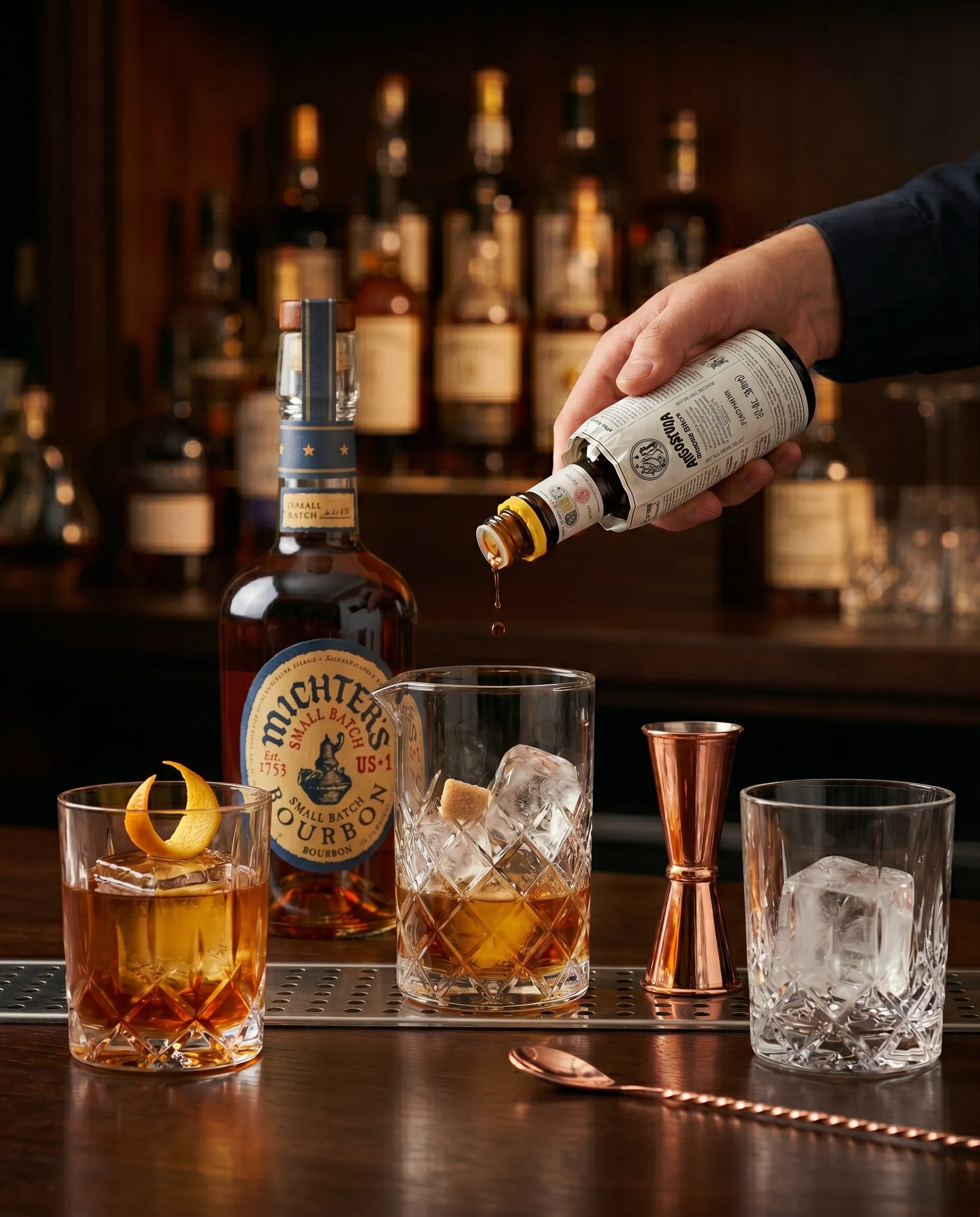
The second drink will feel more finished. The sweetness will seem less obvious, the whiskey will feel more aromatic, and the finish will last longer. Nothing dramatic happens, and that is the point. Bitters do not perform a trick. They correct the balance.
Once you taste that difference, the category starts to make sense.
The Bottles That Matter First
You can buy bitters in almost any flavor now: chocolate, mole, celery, lavender, black walnut, tiki, cardamom, grapefruit, smoked chili, rhubarb, and plenty of bottles that sound more useful than they are.
Ignore most of them at first.
A home bar does not need a dozen bitters. It needs two or three good bottles that actually earn their place.
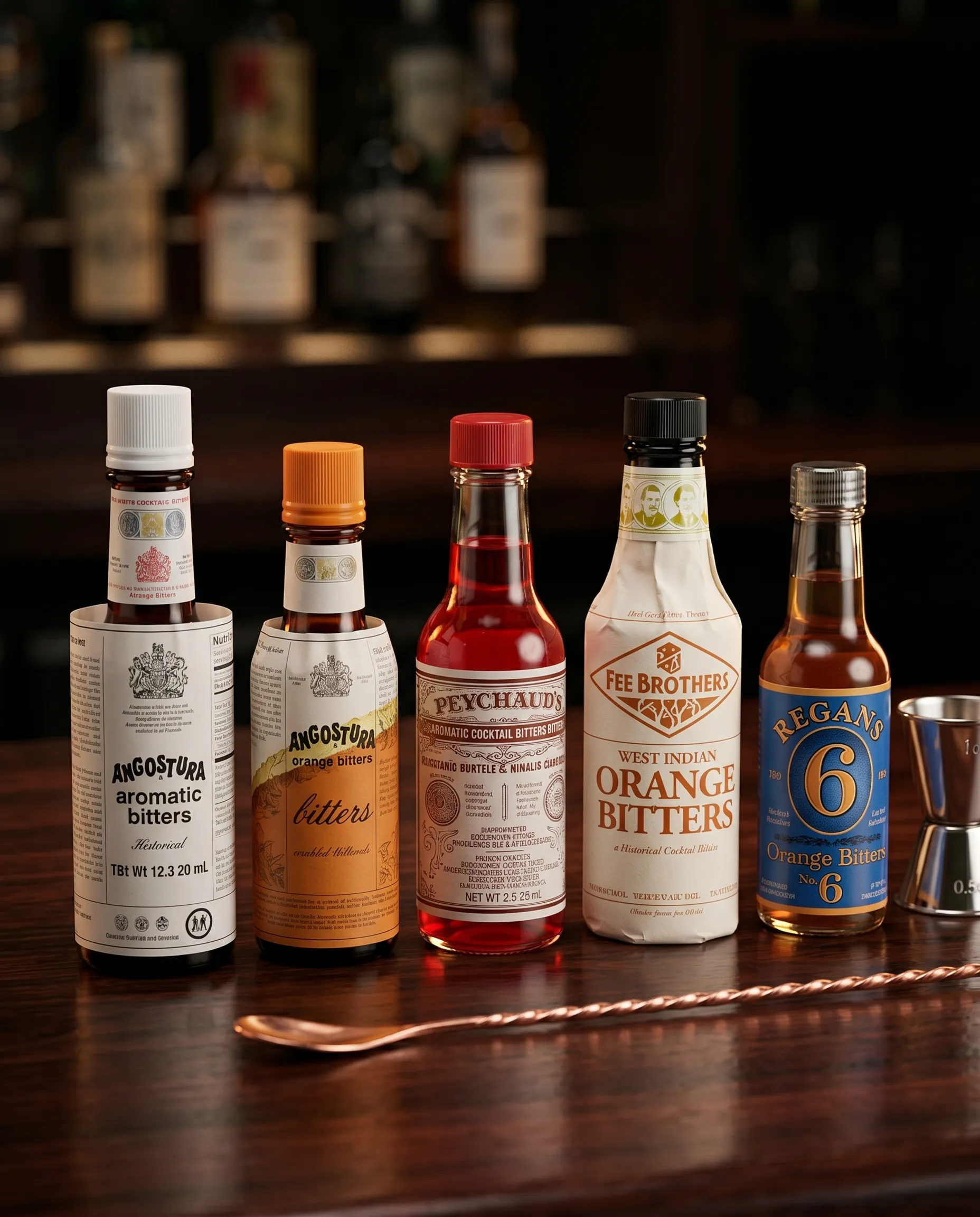
This is the foundation. Angostura is the obvious example and the bottle most recipes assume when they simply say "bitters." Warm spice, clove, cinnamon, gentian, and a deep aromatic bitterness that works in Old Fashioneds, Manhattans, Champagne Cocktails, rum drinks, and more. If you only buy one bottle, buy this one.
The most useful next step. Orange bitters are brighter and more citrus-led than aromatic bitters, which makes them especially good in Martinis, lighter stirred drinks, and anything where you want lift rather than warmth. A dry Martini with orange bitters feels older, sharper, and more complete.
Lighter, redder, more floral, and slightly anise-like. Peychaud's is essential for a Sazerac and one of the defining ingredients in a Vieux Carré. It is less universal than aromatic bitters, but when a drink needs it, nothing else tastes quite right.
Angostura, Peychaud’s, and Orange Bitters
The mistake is thinking of bitters by brand alone. It is better to think by role.
Aromatic bitters bring warmth and depth. They belong naturally with aged spirits: whiskey, brandy, rum. They are the bitters in an Old Fashioned because they make the whiskey feel broader and more dimensional. They are the bitters in a Manhattan because they pull rye and vermouth into alignment.
Peychaud’s bitters bring brightness, color, and a lighter anise-floral note. They do not replace Angostura. They point the drink in a different direction. In a Sazerac, Peychaud’s is not a small adjustment; it is part of the drink’s identity.
Orange bitters bring lift. They are at home with gin, dry vermouth, vodka, light rum, and other cleaner spirits. They are particularly useful in Martinis because they add aromatic complexity without making the drink feel heavier.
This is the practical map. Warmth, brightness, lift. Once you understand that, choosing the bottle becomes easier.
How Much Is a Dash?
This question sounds fussy until you start paying attention to how differently bottles behave.
A dash is not an exact measurement. It depends on the bottle, how full it is, the size of the dasher top, and how hard you move your wrist. That is annoying if you want laboratory precision, but cocktails are not laboratory work. They are repeatable habits.
For most drinks, one to three dashes is the useful range.
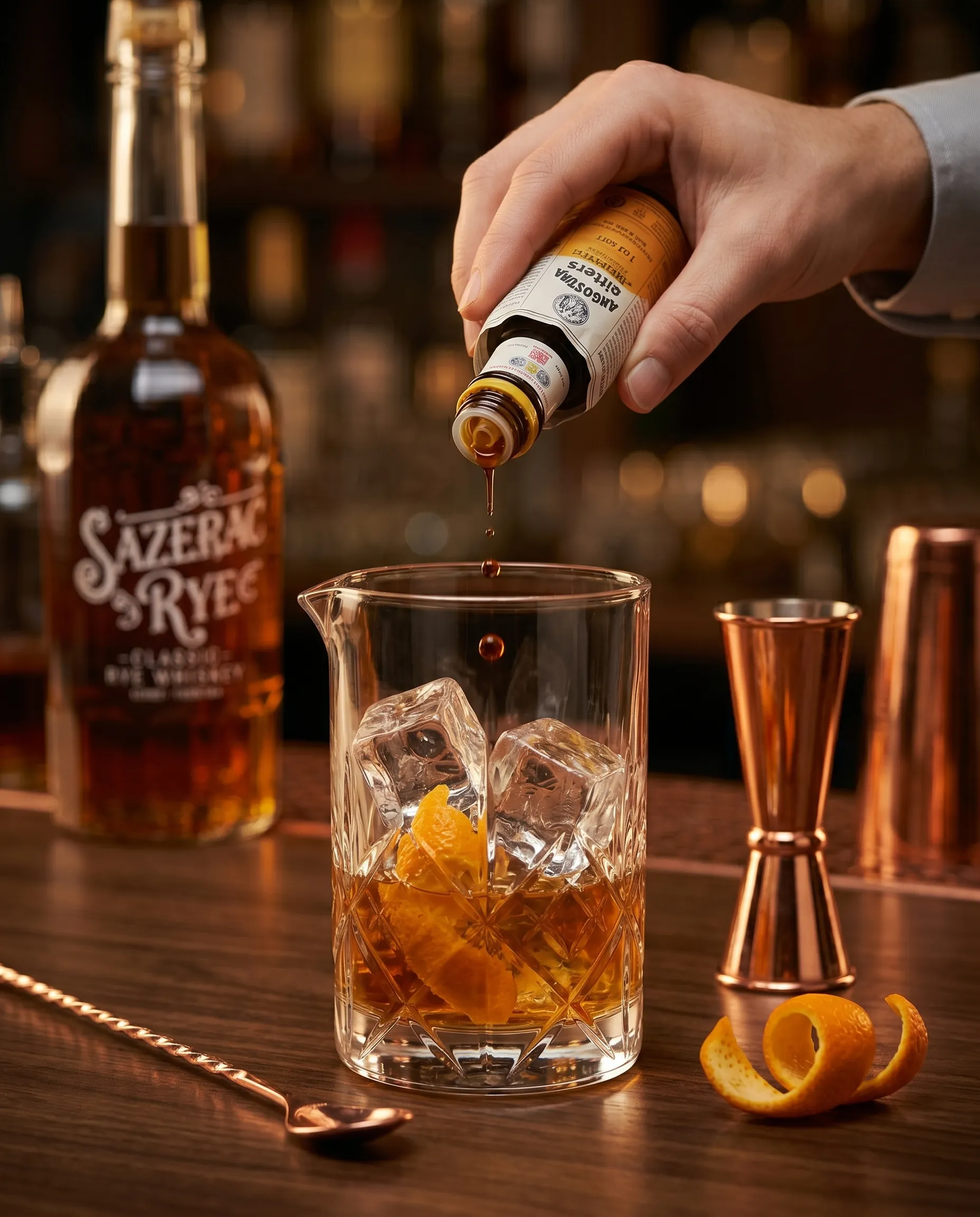
If you are new to a bottle, start with two dashes in a drink you already know. Taste it. Next time, adjust. The goal is not to measure perfectly. The goal is to learn what the bottle does.
When Specialty Bitters Are Worth It
Specialty bitters are not a scam. They can be excellent. But they are usually not where a home bartender should start.
Black walnut bitters can be beautiful in a Manhattan or a rum Old Fashioned. Chocolate or mole bitters can add depth to tequila, mezcal, aged rum, and bourbon drinks. Celery bitters can bring savory lift to a Martini, a Gin Rickey, or a Bloody Mary. Tiki bitters can make sense if you are building drinks with rum, citrus, allspice, or orgeat.
But each of those bottles has a narrower job. Buy them when you know the job exists.
If you make a Manhattan every week and want a darker, nuttier version, black walnut bitters make sense. If you rarely make stirred whiskey drinks, they will sit on the shelf looking interesting and doing nothing.
That is the rule: do not buy a flavor. Buy a use case.
Do Bitters Go Bad?
Not in the way vermouth does.
Because most cocktail bitters are concentrated and alcohol-based, they last a very long time. You do not need to refrigerate them, and you do not need to replace them every few months. They are much more stable than citrus juice, syrups, or vermouth.
That said, they are not immortal. Aromas can fade over time, especially if the bottle is stored in direct sunlight or left with the cap loose. Keep bitters upright, closed, and away from heat and bright light. If a bottle smells dull after years on the shelf, it probably is.
But for normal home use, bitters are one of the safest purchases you can make. A bottle may last for years, and that is fine.
Cocktails That Depend on Bitters
Some drinks use bitters as an accent. Others depend on them completely.
Whiskey, sugar, bitters, ice. Remove the bitters and the drink becomes sweetened whiskey. Add them back and it becomes one of the great cocktails.
Rye or bourbon, sweet vermouth, and aromatic bitters. The bitters keep the vermouth from making the drink too soft and help the whiskey stay in focus.
Rye, sugar, Peychaud's bitters, and an absinthe rinse. Peychaud's is not optional here. It is part of the drink's architecture.
Rye, cognac, sweet vermouth, Bénédictine, Peychaud's, and Angostura. Two bitters, two jobs: floral lift from Peychaud's, warm structure from Angostura.
Orange bitters belong in many older Martini recipes and are worth revisiting. They add citrus aroma and structure without changing the essential cold, clean character of the drink.
The Bottle Is Small for a Reason
Cocktail bitters are easy to overlook because they do not behave like the rest of the bar. You do not pour them. You do not build drinks around them in any normal sense. You rarely taste them directly unless you are trying to understand the bottle.
But they are one of the clearest examples of what cocktail making really is: small adjustments that change the whole shape of a drink.
A quarter ounce of syrup can ruin a balance. Ten seconds of stirring can change texture. A warm glass can flatten a Martini. A cloudy cube can over-dilute an Old Fashioned. And two dashes of bitters can turn a drink from assembled to finished.
Start with aromatic bitters. Add orange bitters next. Buy Peychaud’s when you are ready to make a Sazerac or a Vieux Carré. After that, let the drinks you actually make tell you what bottles deserve space.
The goal is not to collect bitters. The goal is to understand what each one does.
If you have bitters on your shelf, Alchemy will show you the cocktails they unlock alongside everything else in your bar. Sometimes the difference between what you can almost make and what you can actually make is two dashes from a very small bottle.
Common Questions
Cocktail bitters are concentrated botanical extracts made by infusing herbs, roots, bark, spices, fruit peel, or other aromatics into alcohol or another base. They are used in tiny amounts, usually dashes, to add depth, aroma, and structure to cocktails.
Bitters act like seasoning. They sharpen sweetness, add aroma, connect flavors, and give a drink a more complete finish. They are not usually meant to make the cocktail taste obviously bitter. In classics like the Old Fashioned and Manhattan, bitters are what keep the drink from tasting flat.
Start with aromatic bitters, usually Angostura-style bitters. They work in Old Fashioneds, Manhattans, rum drinks, and many stirred classics. After that, orange bitters are the most useful second bottle, especially for Martinis and lighter spirit-forward drinks.
No. Angostura-style aromatic bitters are darker, warmer, and more spice-driven. Peychaud's bitters are lighter, redder, more floral, and slightly anise-like. Angostura belongs naturally in an Old Fashioned or Manhattan, while Peychaud's is essential to the Sazerac and Vieux Carré.
Cocktail bitters last a very long time because they are concentrated and usually alcohol-based. They do not spoil like vermouth or citrus juice, but their aroma can fade over time if the bottle is stored badly. Keep them closed, upright, and away from direct sunlight.