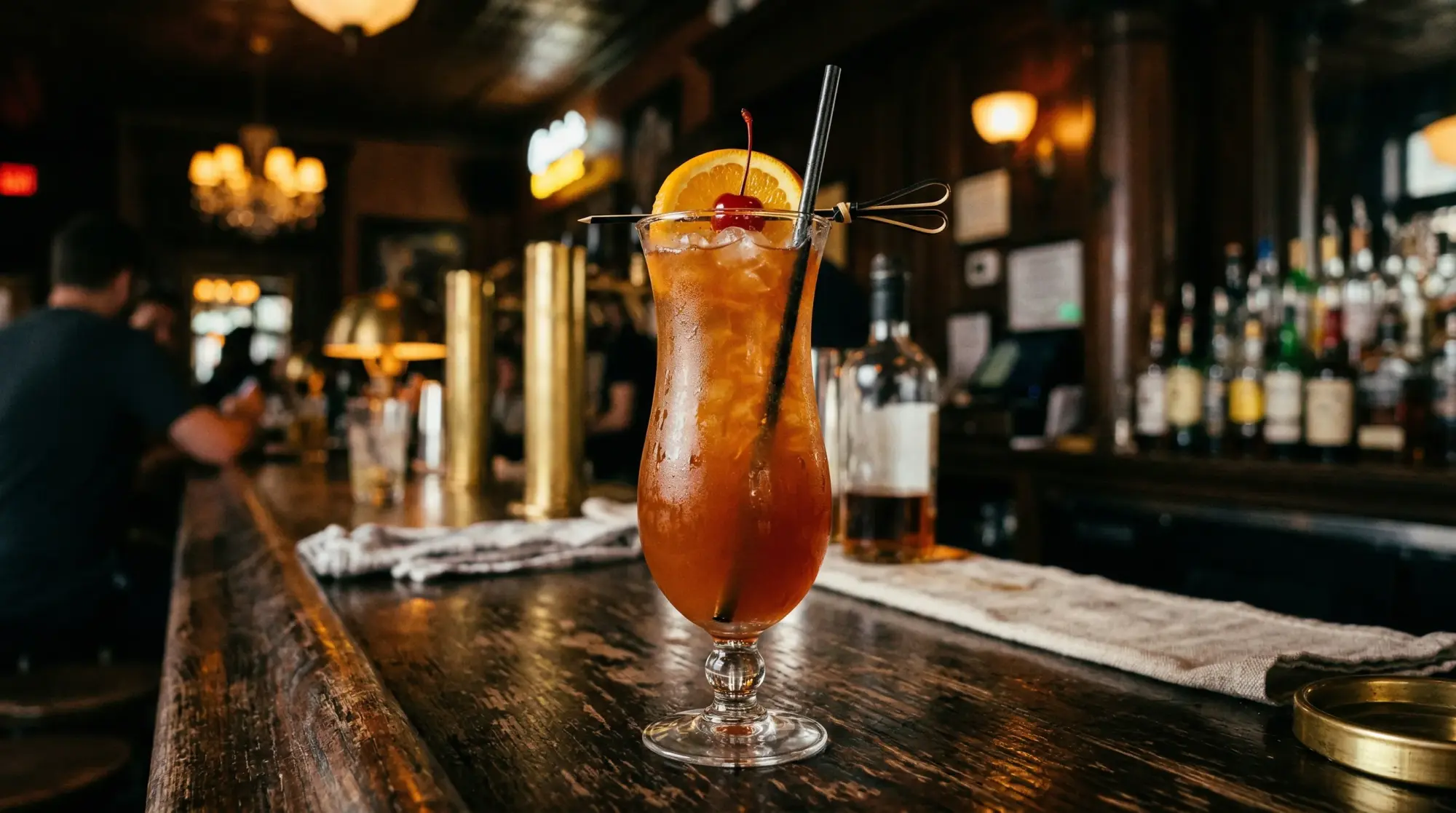
At a glance: Invented in 1942 at Pat O'Brien's in the French Quarter as a way to unload a wartime rum surplus, the Hurricane is a New Orleans classic built on light and dark rum, passion fruit syrup, and fresh citrus. The tourist versions poured from slushie machines on Bourbon Street bear little resemblance to the original. Made properly, with real passion fruit syrup and a 50/50 rum split, it is a layered, rum-forward drink that earns its place alongside the Sazerac and Ramos Gin Fizz.
The Hurricane is one of those drinks that gets dismissed before it gets a fair hearing. Order one at a tourist bar on Bourbon Street and you might get a neon-red slushie poured from a plastic bag. Make one properly at home and you get something else entirely: a layered, rum-forward cocktail with real depth, a genuine origin story, and the kind of presence that makes sense of why it became the defining drink of New Orleans.
The Hurricane cocktail is a classic New Orleans cocktail made with rum, passion fruit syrup, and citrus. While often associated with tourist bars, the original Hurricane cocktail recipe is far more balanced and historically grounded.
Who Invented the Hurricane Cocktail in New Orleans?
In 1942, wartime supply shortages were making life difficult for bar owners across the United States. Whiskey was scarce. Distributors, sitting on mountains of rum, found a way to move their inventory: if you wanted your whiskey allocation, you took the rum first. Pat O’Brien, owner of the bar that still bears his name in the French Quarter, found himself with cases of rum he needed to sell and customers who mostly wanted something else.
His solution was the Hurricane. Named for the shape of the glass it was served in, which resembles a hurricane lamp, the drink was built around the rum he had in abundance. He paired it with passion fruit syrup and citrus, created something genuinely delicious, and served it in an oversized Hurricane glass that became its own attraction.
The drink worked. Pat O’Brien’s became an institution. The Hurricane became the cocktail of Mardi Gras, of the French Quarter in New Orleans itself. What came later is not the drink’s fault.
Today’s version of the Hurricane typically includes orange juice and a barspoon of grenadine, though earlier recipes were simpler, built more tightly around rum, citrus, and passion fruit syrup.
What Makes the Hurricane Cocktail Work
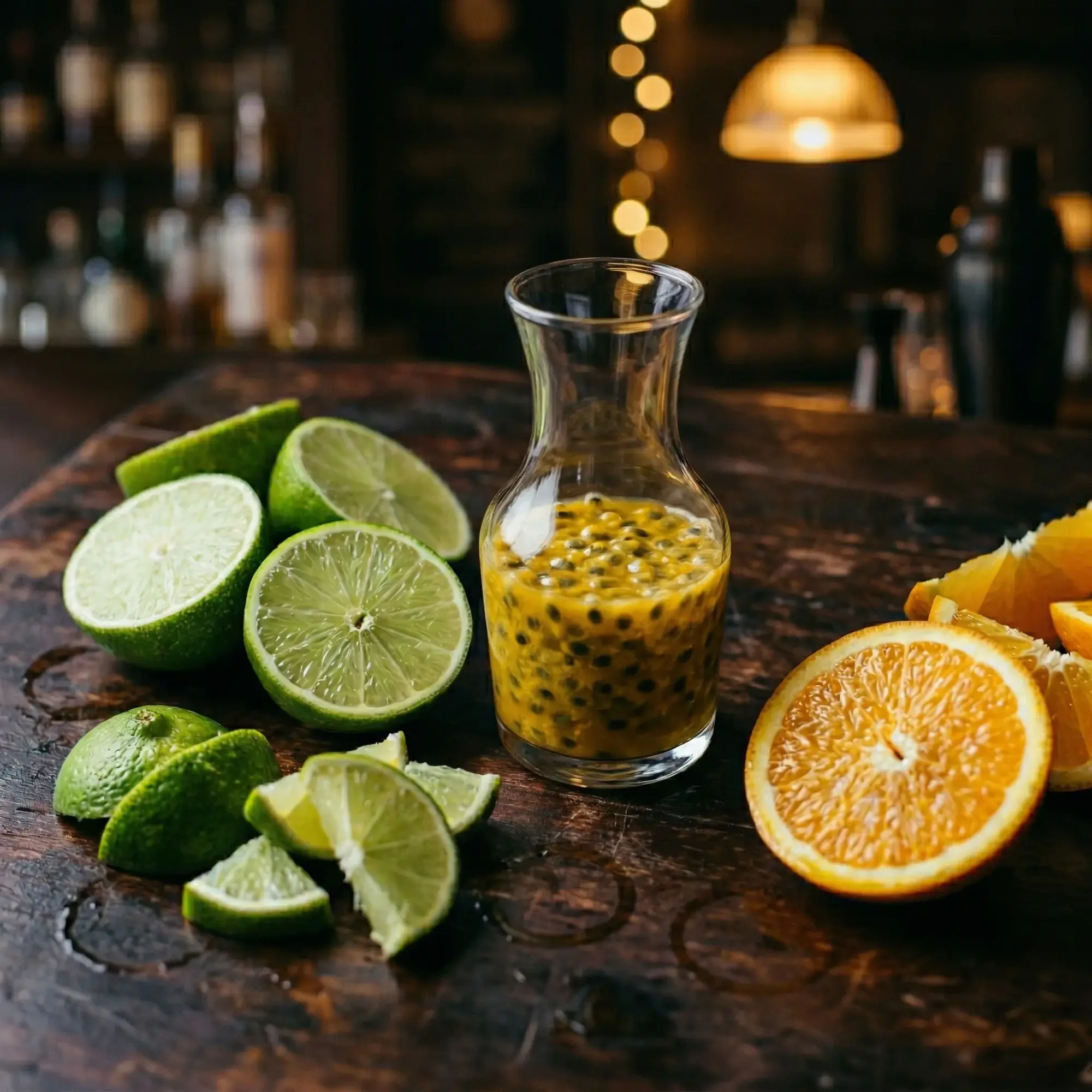
This is where the conversation usually goes wrong. The Hurricane’s reputation as a party drink has led to shortcuts that strip out everything interesting about it. A proper Hurricane has structure, and every ingredient is doing something specific.
Light Rum + Dark Rum
A two-rum split is now the standard approach. Light rum provides a clean, neutral base. Dark rum adds molasses, caramel, and depth. Using only one produces a flatter drink. The combination creates a body more interesting than either alone.
Passion Fruit Syrup
This is the ingredient that defines the Hurricane and separates it from every other rum punch. Passion fruit has an almost tropical tartness that cuts through the sweetness and gives the drink its distinctive character. If your Hurricane recipe does not include passion fruit or a passion-fruit-based syrup like Fassionola, it is missing the defining element of the drink.
Fresh Citrus
Orange juice adds body and natural sweetness. Lime juice provides the acid that keeps the drink from becoming cloying. Both need to be fresh, not from a bottle or a carton.
Grenadine
A small amount, for colour and a hint of pomegranate sweetness. It rounds the edges. Not the lead, not the star, just the finishing touch that ties the drink together visually and on the palate.
Hurricane Cocktail Recipe
The Hurricane’s balance depends on the relationship between the rum, the passion fruit syrup, and the citrus. Too much syrup and it becomes a fruit punch. Too little and the rum overwhelms everything else.
1 oz fresh orange juice / 1 oz fresh lime juice / 1 barspoon grenadine
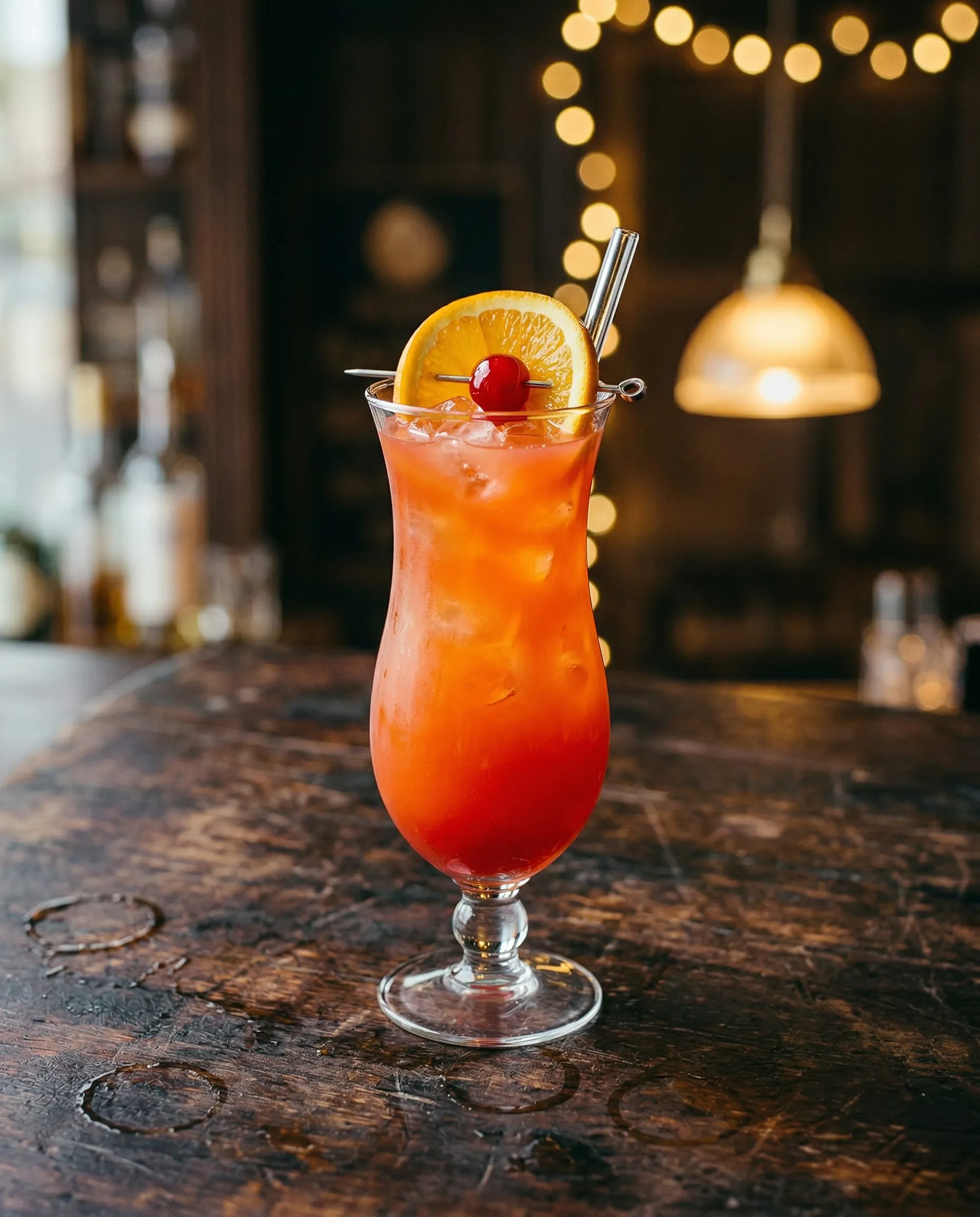
Garnish with an orange slice and a cherry.
Passion fruit syrup is the defining ingredient and the one most likely to require a special trip. Specialty food stores, online retailers, and well-stocked liquor stores usually carry it. Brands like Monin and Torani are reliable. Some bartenders prefer Fassionola, a historic tropical syrup with layered fruit notes that adds additional complexity.
Choosing Your Rum
Because the Hurricane uses equal parts light and dark rum, the quality and character of both matters.
Something clean and neutral that provides structure without competing with the dark rum or the passion fruit. This is the foundation, not the feature.
Molasses, caramel, and depth. Gosling's is the classic choice and the same rum that goes into a Dark 'n' Stormy. You want something with enough character to assert itself against 2 oz of passion fruit syrup.
New Orleans in a Glass
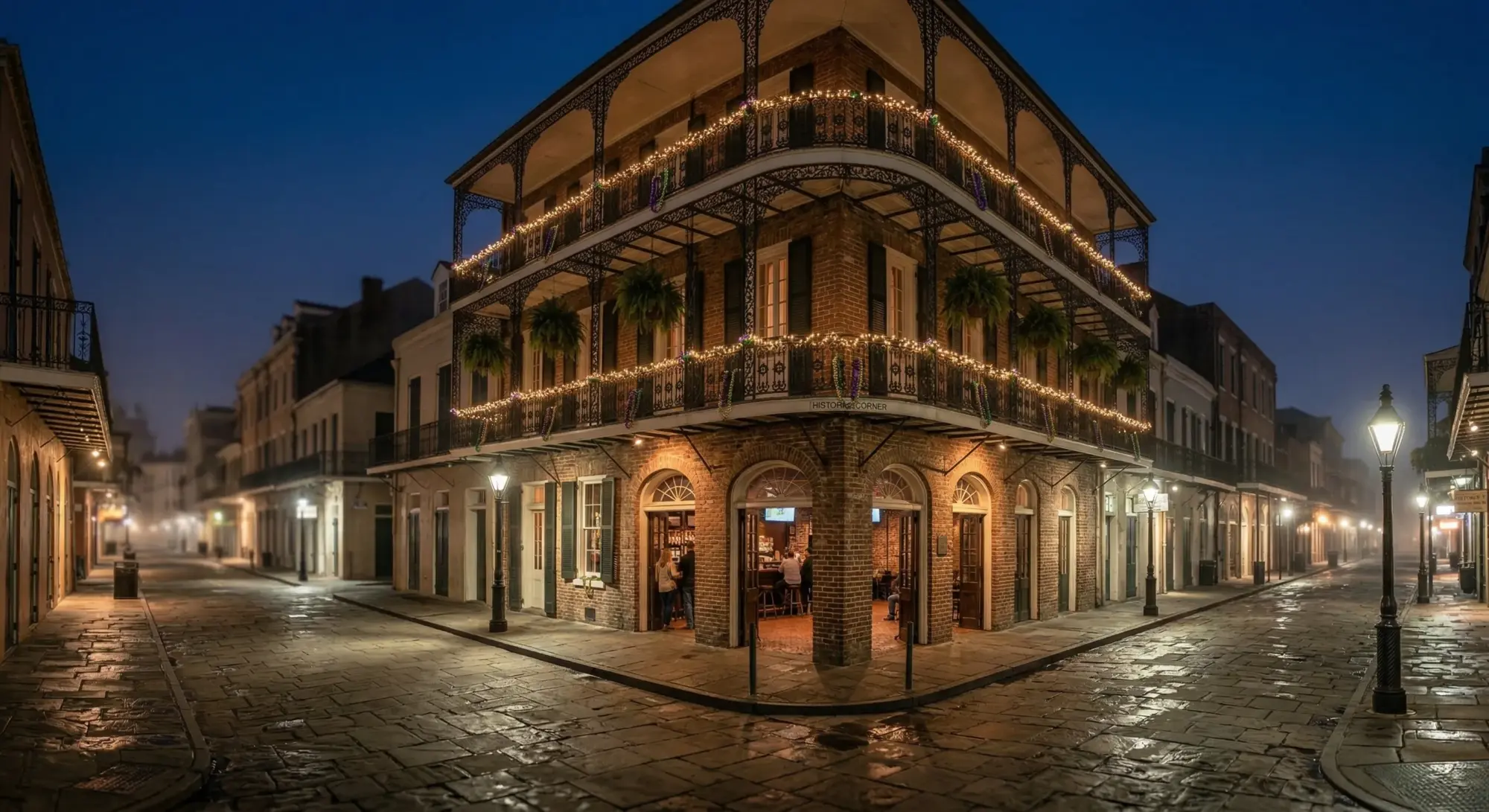
The Hurricane is not the only reason to pay attention to New Orleans as a cocktail city. It might be the most famous export, but the city’s contribution to cocktail history runs considerably deeper.
The Sazerac, often cited as one of the earliest American cocktails, was born in New Orleans in the 1800s, and Peychaud’s, the bitters that define it, was invented in the city in the 1830s by a Creole apothecary - one of the original cocktail bitters still in wide use today. The Vieux Carré, a stirred cocktail of rye, cognac, sweet vermouth, Bénédictine, and bitters, was invented at the Hotel Monteleone. The Ramos Gin Fizz, which requires eight to twelve minutes of continuous shaking to achieve its signature frothy texture, is a New Orleans original.
New Orleans has a relationship with drinking that is different from most American cities. It is older, more European in its attitude, and more deeply embedded in the culture. The cocktail is not an accessory there. It is part of the fabric. The Hurricane fits into that tradition even if it looks, at first glance, like a crowd-pleaser rather than a serious drink.
Making It at Home
On the rum split: Do not skip the two-rum approach. The combination of light and dark rum is not decorative. A 50/50 split is the standard starting point.
On the glass: The Hurricane glass is part of the experience if you have one, but it is not essential. Any large glass works. The drink is built for volume, so do not try to scale it down into a coupe.
On the garnish: An orange slice and a maraschino cherry on a skewer is the traditional presentation. It is not ironic. It suits the drink.
On batch-making: The Hurricane scales well for a crowd. Multiply the recipe, combine everything except ice in a pitcher, refrigerate, and pour over ice to order. It is one of the better batch cocktails for a party because the flavours hold up and the preparation is straightforward.
The Hurricane has a reputation problem, and the reputation problem is not its fault. Every drink that becomes popular enough gets simplified, cheapened, and served in a version that bears little resemblance to the original. The Margarita gets the same treatment. So does the Mojito. The answer is not to abandon the drink. The answer is to make it correctly.
Get the passion fruit syrup. Split the rum. Use fresh citrus. Make it in a glass large enough to honour the tradition. Pat O’Brien solved a rum surplus problem and accidentally created one of the great American cocktails.
If you have light and dark rum on your shelf, Alchemy will surface the Hurricane automatically alongside everything else you can make from what you already have.
Common Questions
A proper Hurricane contains light rum, dark rum, passion fruit syrup, fresh orange juice, fresh lime juice, and a barspoon of grenadine. The passion fruit syrup is the defining ingredient that separates it from other rum punches.
The Hurricane was created in 1942 by Pat O'Brien, owner of Pat O'Brien's bar in the French Quarter of New Orleans. He invented it to move a surplus of rum that wartime distributors forced him to buy alongside his whiskey allocation.
The cocktail is named after the shape of the glass it was originally served in, which resembles a hurricane lamp. The distinctive glass became part of the drink's identity and attraction at Pat O'Brien's bar.
The Hurricane uses both light rum and dark rum in equal parts. A clean light rum like Bacardi Superior provides the base, while a dark rum like Gosling's Black Seal adds the molasses and caramel depth that gives the drink its character. Using only one type produces a flatter result.