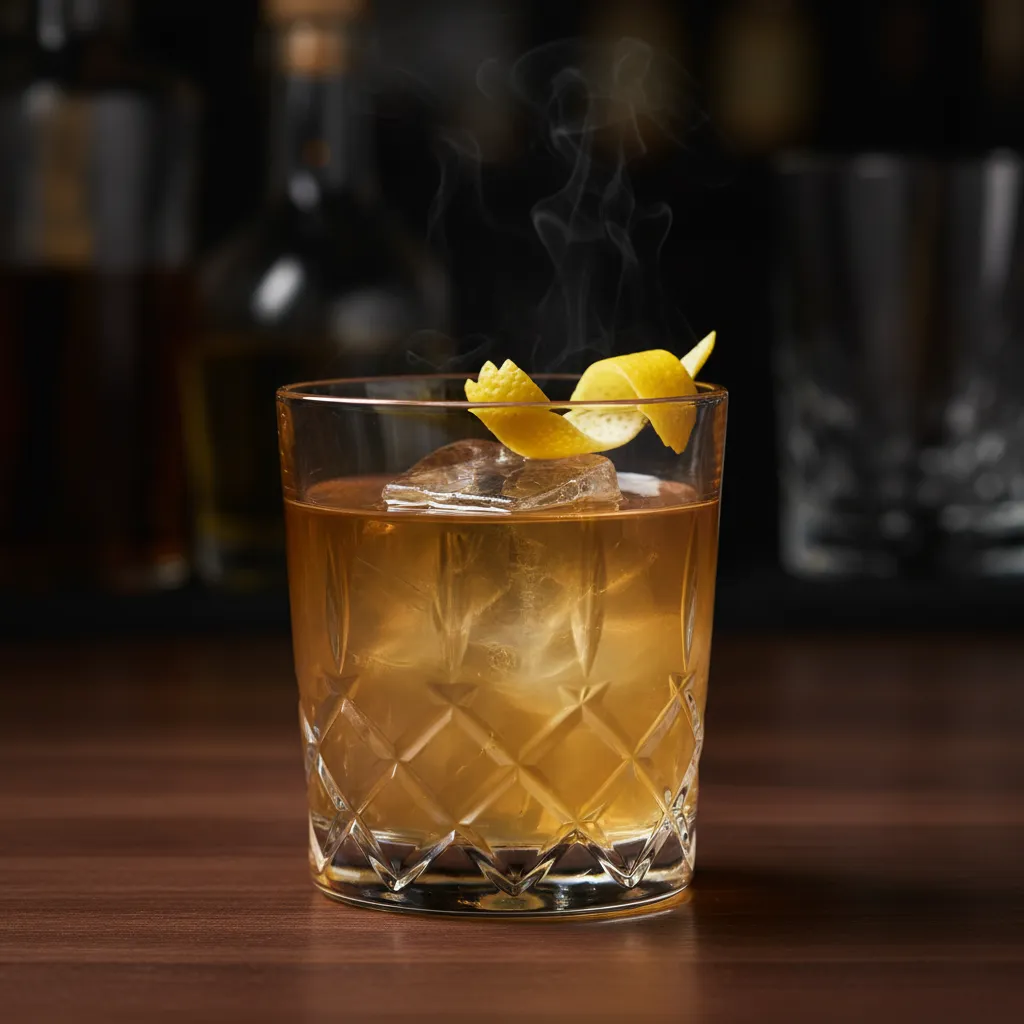
At a glance: Created in 2005 by Sam Ross at Milk and Honey in New York, the Penicillin is one of the rare modern cocktails to earn genuine classic status in under two decades. It uses a Whiskey Sour template - spirit, citrus, sweetener - but swaps simple syrup for honey-ginger and floats a smoky Islay single malt over a blended Scotch base. The result is a drink that changes as you sip: smoke first, then honey, then the quiet confidence of a cocktail that solved its own problem.
The cocktail world does not produce genuine classics very often. The Penicillin is one of the rare exceptions. Most drinks that get called “modern classics” are really just popular recipes that circulated for a few years before fading. The Penicillin is different.
Created in 2005 by Sam Ross at Milk and Honey in New York, it earned a place in the permanent canon in under two decades - faster than almost any drink in history. Not because it is complicated, but because it solved something: how to make Scotch accessible to people who think they do not like it, while still giving Scotch lovers something new.
What Makes the Penicillin Work
The Penicillin is built on the Whiskey Sour template - spirit, citrus, sweetener - but Ross made three decisions that turned a familiar structure into something new.
First, he split the Scotch into two roles: a blended base for body, and an Islay single malt float for character. The base does the work you would expect from a sour. The float does something else entirely - it sits on top and is the first thing you smell and taste. As you drink through it, the honey and lemon come forward, and the drink shifts.
Second, he replaced simple syrup with honey-ginger syrup. This is not a minor detail. The ginger provides warmth and spice that simple syrup cannot, and the honey has a richness that holds its own against the peat from the float. The syrup is the soul of the drink.
Third, the name. Penicillin is unexpected, slightly funny, and easy to remember. It does not sound like a cocktail, which is part of why it spread.
The Ingredients
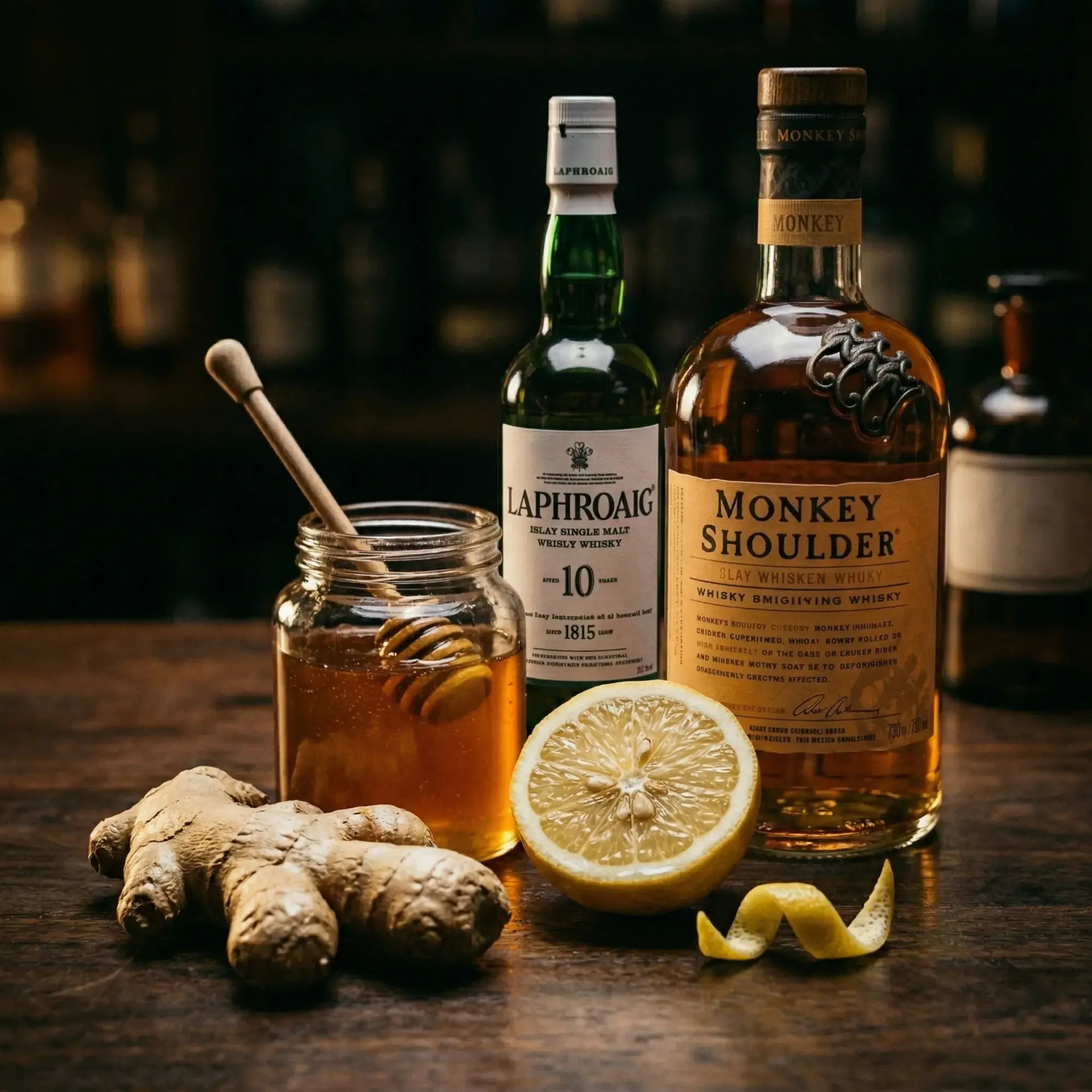
Blended Scotch
The base. Blended rather than single malt is intentional - it is approachable, slightly sweet, and does not compete with the Islay float. Monkey Shoulder or Famous Grouse both work well. You want a base that is present but stays out of the way.
Fresh Lemon Juice
The acid. As with any sour, fresh is non-negotiable. Bottled lemon juice is flat and slightly bitter in a way that throws off the balance. Squeeze it to order.
Honey-Ginger Syrup
The soul. Equal parts honey and water with a generous amount of fresh ginger, heated gently, simmered for a few minutes, steeped, then strained. The ratio matters - too much ginger overwhelms, too little and you lose the warmth that makes the drink interesting. Keeps in the fridge for two weeks.
Islay Single Malt Float
The character. Laphroaig 10 or Ardbeg are the standard choices - both heavily peated, which is the point. You only use about a quarter ounce, but it defines the entire experience. The smoke, the brine, the intensity. This is what makes the Penicillin the Penicillin.
The Float Technique
The float is the part that intimidates people, but it is straightforward.
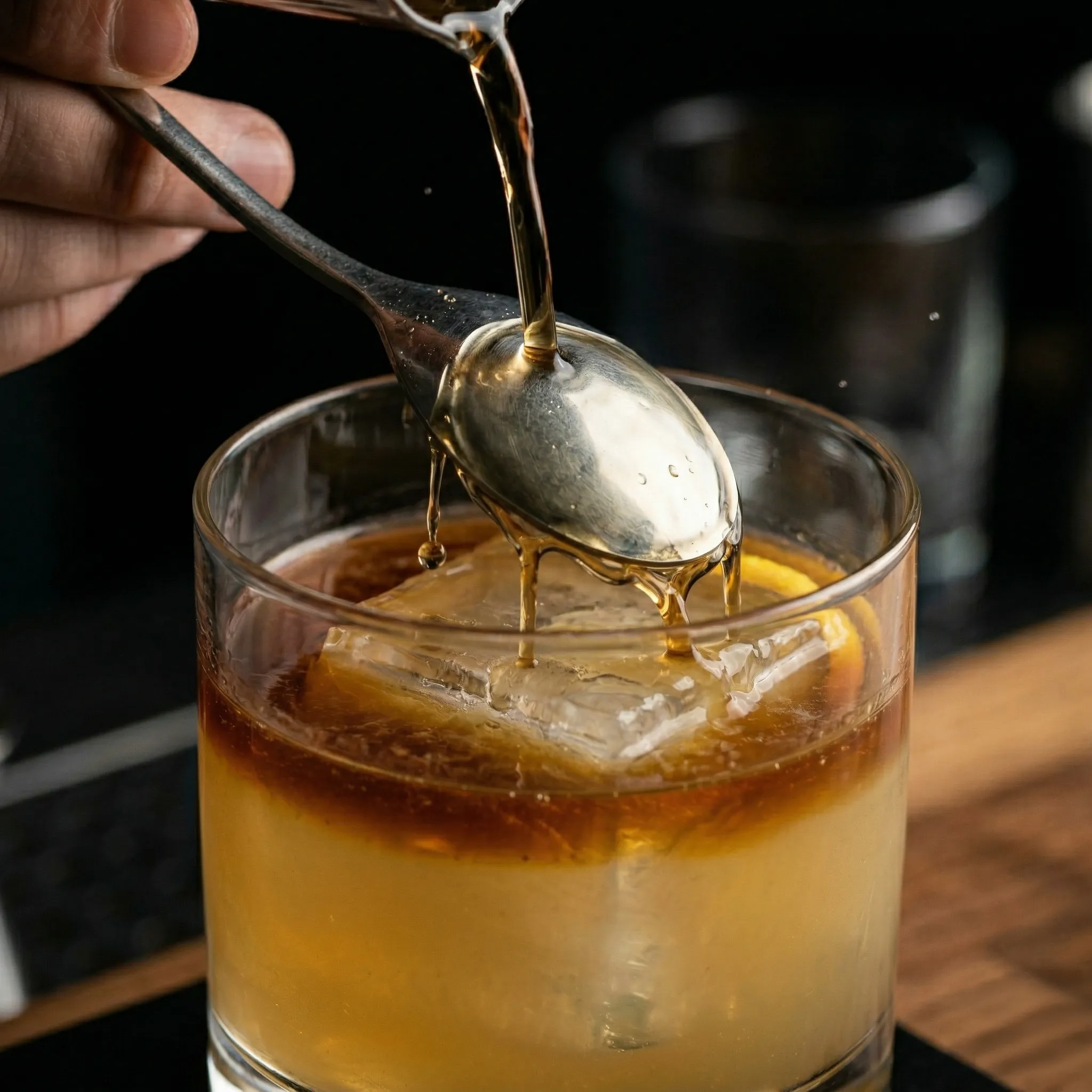
After you have shaken and strained the base into your glass over a large ice cube, hold a bar spoon just above the surface of the drink with the back of the spoon facing up. Pour the Islay Scotch slowly over the back of the spoon. The spoon disperses the liquid so it lands on top rather than sinking through.
The goal is a visible layer, not a perfect line. A gentle gradient is fine. What you want to avoid is pouring the Islay directly into the glass, which collapses the whole point of the technique. If you do not have a bar spoon, the back of a regular spoon works.
The Recipe
1/4 oz Islay single malt (floated)
Unlike the Whiskey Sour it is modeled on, there is no egg white here, so no dry shake is needed. The honey-ginger syrup is the only preparation required, and it takes about fifteen minutes. Once you have a batch in the fridge, everything else is standard shaking technique. Chill your rocks glass before building - a cold glass slows dilution from the large cube and keeps the float intact longer.
Choosing Your Scotch
A smooth, approachable blended Scotch that provides body without competing with the float. This is not the place for an expensive single malt. Monkey Shoulder has enough character to hold the drink together; Famous Grouse is lighter and lets the syrup do more work. Both are excellent.
Heavily peated, smoky, with the kind of intensity that defines the drink in a quarter ounce. If it smells like a campfire, you are in the right territory. Laphroaig is the most commonly used and the easiest to find. A small bottle goes a long way at this pour size.
The Penicillin is not a complicated cocktail. The ingredient list is short, the technique is learnable in one or two attempts, and the flavour payoff is immediate. What makes it worth understanding is the thinking behind it - the float is not decoration, the honey-ginger syrup is not just a sweetener, and the whole thing holds together as a single idea rather than a collection of ingredients.
That is what separates a great cocktail from a good one. The Penicillin gets it right.
Once you have the syrup made and the bottles in place, Alchemy will surface it automatically alongside everything else you can make.
Common Questions
A modern classic built on blended Scotch, fresh lemon juice, and honey-ginger syrup, with a float of smoky Islay single malt on top. Created in 2005 by Sam Ross at Milk and Honey in New York.
The name is a playful reference to its “medicinal” feel - honey, ginger, and lemon echo classic cold remedies, while the Scotch provides the spirit. The unexpected name helped the cocktail spread quickly through bar culture.
A smooth blended Scotch like Monkey Shoulder or Famous Grouse for the base, and a heavily peated Islay single malt like Laphroaig 10 or Ardbeg 10 for the float. The contrast between the approachable base and the smoky float is what defines the drink.
Combine equal parts honey and water with a generous amount of fresh sliced ginger. Heat gently until the honey dissolves, simmer for a few minutes, then steep for 10-15 minutes before straining. Store in the fridge for up to two weeks.