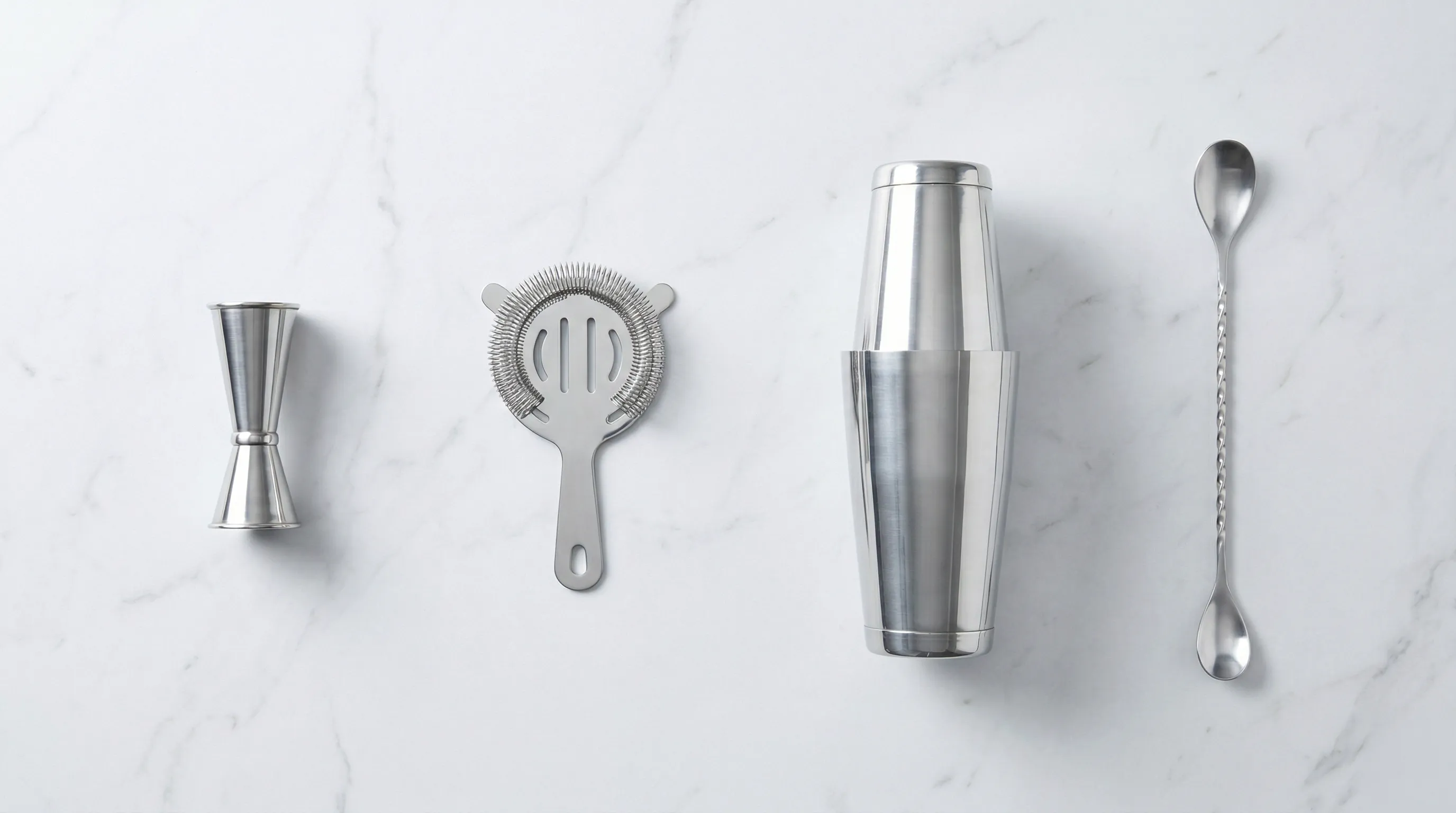
At a glance: Most home bar advice tells you to buy a full kit before you know what you want to make. This guide takes the opposite approach: start with four tools - a jigger, a cocktail shaker, a Hawthorne strainer, and a bar spoon - and you can make the majority of classic cocktails properly. Kits are usually a waste, the fancy gadgets rarely earn their counter space, and understanding balance and dilution matters more than any piece of metal on your bar.
If you are getting into making cocktails at home, it is easy to think you need a lot of equipment.
You do not.
What actually matters is understanding the drink. Balance. Temperature. Dilution. The tools just help you get there consistently. For the bottles that belong alongside those tools, see the first 10 bottles for a serious home bar.
Most advice around cocktail equipment gets this backwards. You are told to buy a full kit before you even know what you like to make. The result is predictable: too many tools, the wrong tools, and a setup that looks impressive but does not get used.
The Core Four
This is the foundation. With these four tools, you can make the majority of classic cocktails properly.
Jigger
The most important tool behind the bar. Precision is what separates a balanced drink from a mediocre one. A simple 1 oz / 2 oz jigger is enough for almost every recipe. However, the OXO Steel Double Jigger is one of the easiest to use, especially if you are just getting started, and includes 1/4, 1/3 and 3/4 as-well.
Cocktail Shaker
You need a shaker for any drink with citrus, juice, or egg white - that includes a Margarita, Daiquiri, or Whiskey Sour. A Boston shaker (two tins that fit together) is the industry standard, and one I'd recommend. A cobbler shaker (the three-piece kind with a built-in strainer and cap) works perfectly well for a home bar setup. For the full breakdown, see Boston shaker vs cobbler shaker.
Strainer
If you are using a Boston shaker, you will need a Hawthorne strainer too. It keeps ice shards and pulp out of the final drink, giving you a cleaner result.
Bar Spoon
A bar spoon is not just for stirring. It controls dilution, and it is also the tool you need for floating spirits, as in the smoky Islay top on a Penicillin. A properly stirred cocktail should be cold, smooth, and integrated - not watery.
With just these four tools, you can make most of the classics. Margarita, Daiquiri, Whiskey Sour - anything shaken. For stirred drinks like a Manhattan, Negroni, Old Fashioned, or Vieux Carré, you can stir in the tin itself with a bar spoon and strain into the glass. It works, but a mixing glass is the proper tool for the job, and if you make stirred drinks regularly it is worth the upgrade. Several of those stirred classics also depend on a few dashes of cocktail bitters, which sit alongside your tools as the smallest essential on the bar.
Nice to Have
These tools make things easier or more enjoyable, but they are not required to make a good cocktail.
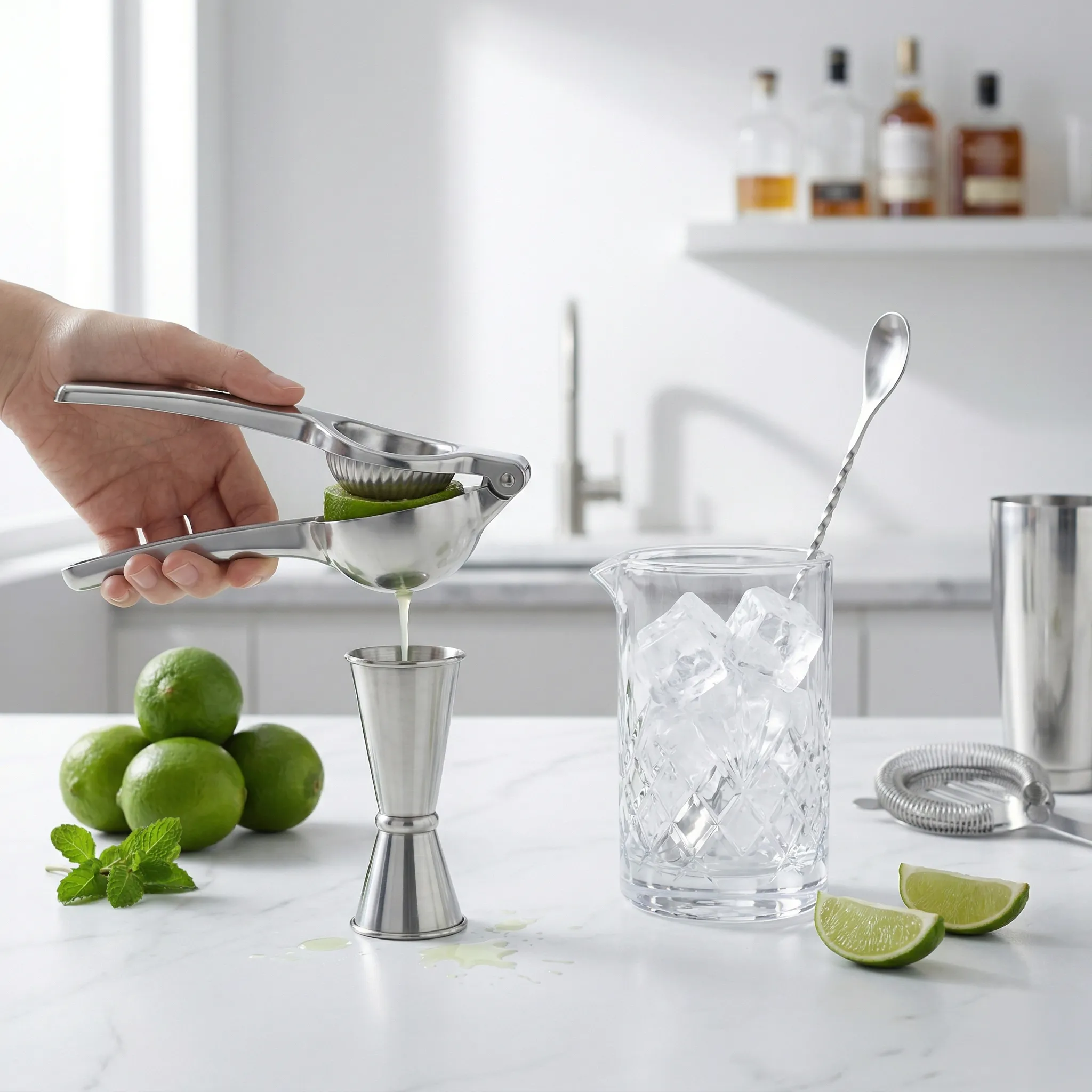
If you make a lot of citrus-forward drinks, a citrus press is worth having. It saves time and effort compared to hand squeezing. The Chef'n FreshForce is a good example of a simple, well-designed tool that delivers consistent results without costing much.
You can stir a cocktail in a regular glass, but a dedicated mixing glass improves control and feels better to use. Viski make clean, well-balanced options that are practical without being overdesigned.
A fine mesh strainer is useful for double straining. It removes small ice shards and pulp, giving shaken drinks a smoother texture.
What You Can Skip
This is where most home bar setups go wrong.
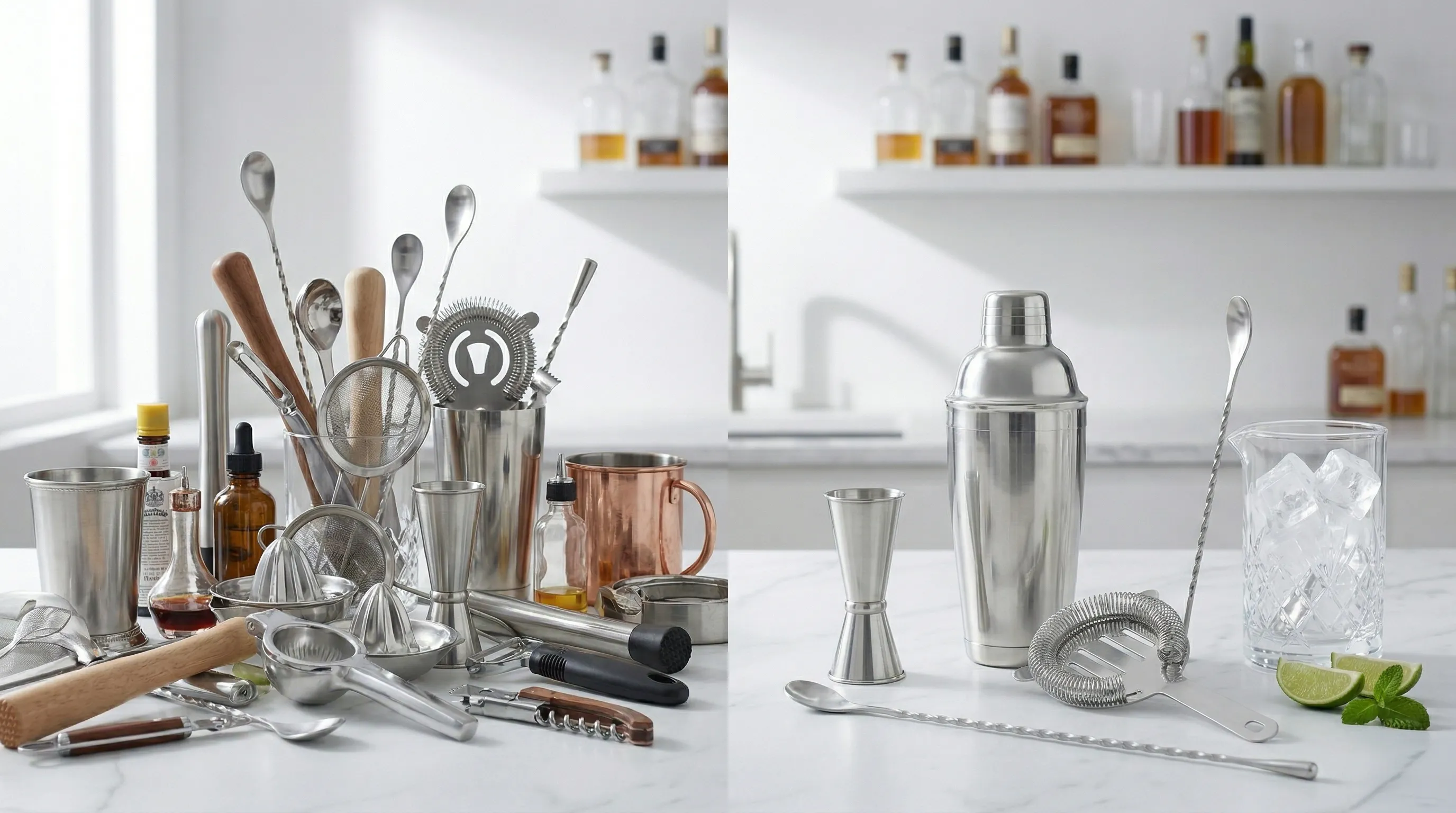
Pre-built cocktail kits. They look appealing, but the quality is usually inconsistent and several of the tools are unnecessary.
Electric cocktail gadgets. If it plugs in, it is almost certainly solving a problem you do not have.
Specialty tools. Unless you are running a professional bar, you do not need highly specific tools for niche techniques.
Too many tools. More equipment does not improve your drinks. It just adds friction. A simple, well-understood setup will always outperform a complicated one.
Where to Buy
If you decide to upgrade, quality matters more than quantity.
Cocktail Kingdom and A Bar Above both make reliable, well-designed cocktail equipment that holds up over time. No gimmicks, just solid tools. I have bought from both. Not sponsored. Just consistent.
Good cocktails are not about equipment. They are about measuring properly, chilling correctly, and diluting with intent. The tools just make that repeatable.
Start with the basics. Learn what each tool actually does. Once you know what you like to make, Alchemy shows you what you can build with what you already have - bottles and tools alike.
Common Questions
A jigger, a cocktail shaker, a Hawthorne strainer, and a bar spoon. With these four tools you can make the majority of classic cocktails properly.
Either works. A Boston shaker is the industry standard and slightly more versatile once you are comfortable with it. A cobbler shaker has a built-in strainer and is easier to use if you are just starting out. Neither is wrong. For a deeper comparison, read Boston shaker vs cobbler shaker.
Not strictly. You can stir a cocktail in any glass. But a dedicated mixing glass gives you better control over dilution and makes the process feel more deliberate. It is a worthwhile upgrade once you are making stirred drinks regularly.
Usually not. Most kits include tools you will not use, and the quality is inconsistent. You are better off buying the four core tools individually from a reputable source like Cocktail Kingdom or A Bar Above.