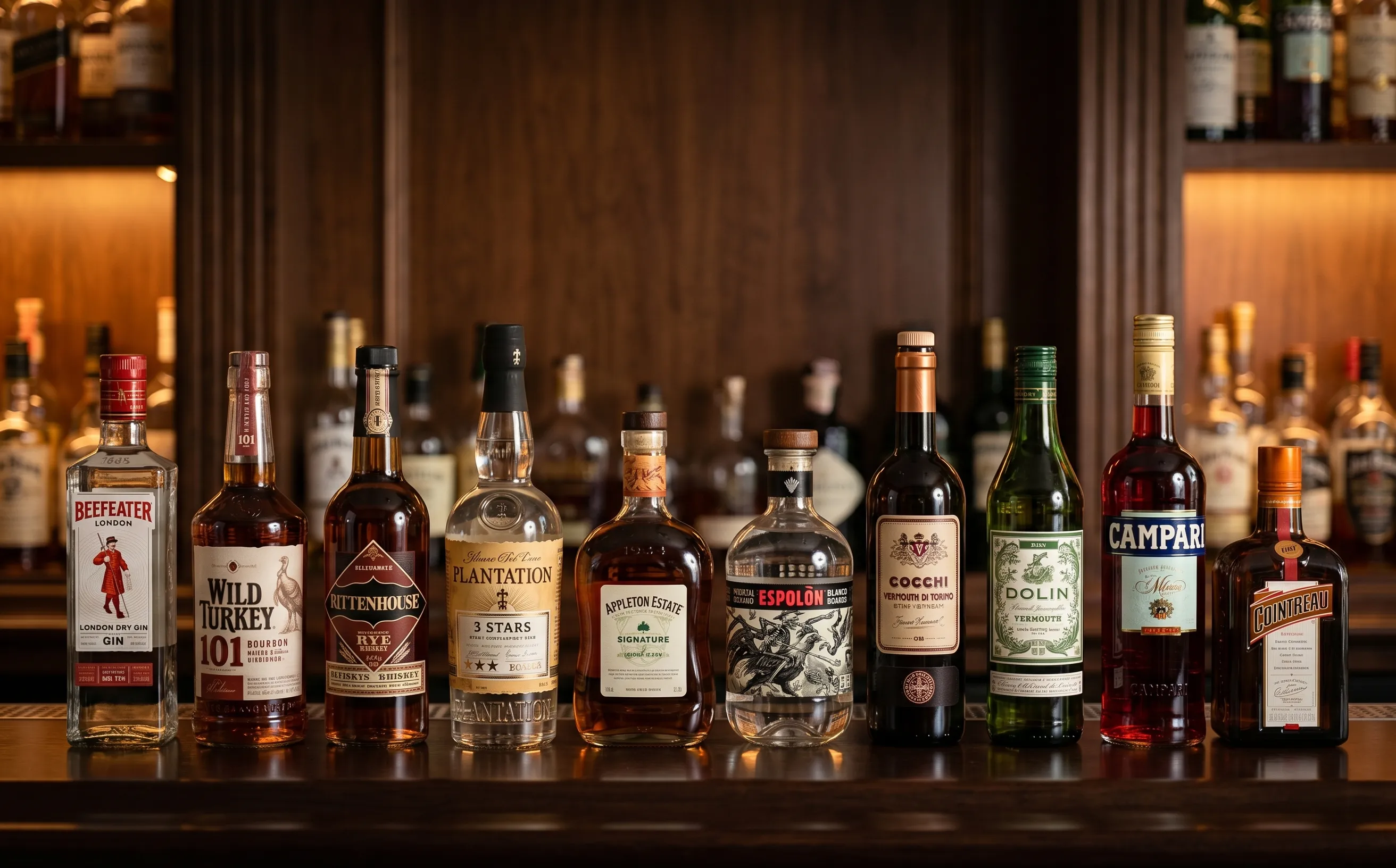
At a glance: Most people build a home bar backwards. They buy one interesting bottle at a time, usually for one recipe, and end up with a shelf that looks impressive but does not make many drinks. A serious home bar starts with coverage: bottles that unlock the most classics with the least waste. With gin, bourbon, rye, light rum, dark rum, tequila, sweet vermouth, dry vermouth, Campari, and orange liqueur, you can make a real working set of cocktails before you buy anything obscure.
Most home bars are built by accident.
Someone buys a bottle of bourbon for Old Fashioneds. Then a bottle of tequila for Margaritas. Then a strange liqueur for one recipe they saw online. A bottle of vermouth appears at some point, gets opened once, and then sits warm on the shelf for six months. Before long the bar looks full, but somehow still cannot make the drink you want.
That’s not really a home bar. That is a collection of leftovers.
The better way to build a home bar is not by buying whatever sounds interesting. It is by buying coverage. Each bottle should unlock multiple drinks, connect to other bottles, and teach you something useful about cocktail structure.
This is the first 10-bottle shelf I would build if I were starting from scratch.
The Rule: Buy Coverage, Not Curiosity
The mistake is easy to understand. Cocktails are full of interesting bottles. Chartreuse, absinthe, crème de violette, falernum, mezcal, aquavit, allspice dram, obscure amaros. They are fun bottles. Some of them are essential eventually.
But they are terrible first purchases.
A bottle that appears in one drink is not useless, but it is narrow. A bottle that appears in twenty drinks changes what your home bar can do. Early on, you want the second kind.
Think of your first shelf like a toolkit. You are not trying to own every tool. You are trying to own the few tools that solve the most problems.
Buy bottles that combine well
Gin with dry vermouth. Rye with sweet vermouth. Rum with lime and sugar. Tequila with orange liqueur and citrus. Campari with gin and vermouth. The best early bottles create combinations, not dead ends.
Buy bottles that teach structure
A good starter shelf should teach you the major cocktail families: sours, stirred spirit-forward drinks, aperitivo drinks, highballs, and simple tropical builds. If a bottle only teaches novelty, it can wait.
Buy bottles you will actually finish
The goal is not to build a museum. The goal is to make drinks. A small set of bottles you use often is better than a large set you admire from a distance.
The First 10 Bottles
This list is not the only possible version, but it is the most practical one. It gives you the widest range of classic cocktails without forcing you into expensive or obscure territory.
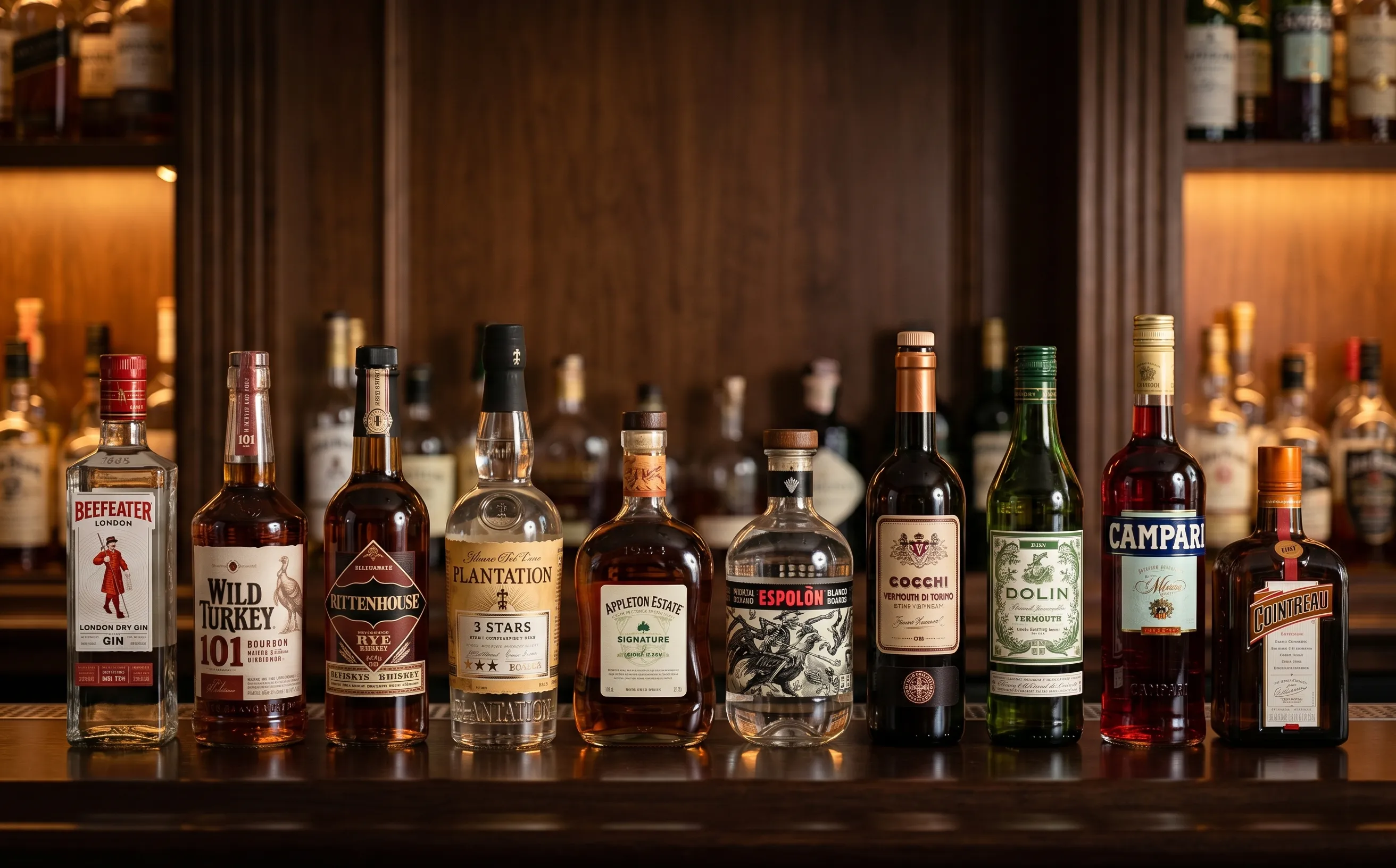
Gin is one of the most useful spirits in cocktails because it brings flavor with it: juniper, citrus peel, herbs, spice. A good London dry gin gives you Martinis, Negronis, Gimlets, Tom Collinses, French 75s, Southsides, and countless variations. Start with something classic and reliable: Beefeater, Tanqueray, Ford's, or Broker's.
Bourbon gives you sweetness, vanilla, oak, and body. It is the friendlier side of American whiskey and the right base for Old Fashioneds, Whiskey Sours, Gold Rushes, Mint Juleps, and Boulevardiers. You do not need anything rare. Buffalo Trace, Wild Turkey 101, Evan Williams Bottled-in-Bond, or Maker's Mark will all do real work.
Rye is drier, spicier, and more structured than bourbon. It matters in drinks where the whiskey needs to hold its shape against vermouth, bitters, or liqueurs. Manhattans, Sazeracs, Old Fashioneds, and Vieux Carrés all benefit from rye's backbone. Rittenhouse is the obvious starting point: affordable, strong enough, and built for mixing.
Light rum is the clean foundation for Daiquiris, Mojitos, Cuba Libres, and a lot of simple tropical drinks. It is not there to dominate. It is there to carry lime, sugar, mint, and fruit cleanly. Bacardi Superior works, but something like Flor de Caña Extra Seco or Plantation 3 Stars gives you more character without making the drink difficult.
This is where rum starts adding depth: molasses, caramel, baking spice, dried fruit, sometimes a little funk. It opens up Mai Tais, Hurricanes, Dark 'n' Stormies, Jungle Birds, and richer rum Old Fashioned variations. Appleton Estate Signature, Gosling's Black Seal, Doorly's 5, or Hamilton 86 are all useful choices depending on the style you like.
Tequila earns its place because the Margarita is not optional. A good blanco also gives you Palomas, Ranch Waters, tequila sours, and simple highballs. Choose something made from 100% agave and avoid anything that tastes like vanilla frosting. Cimarron, Olmeca Altos, Arette, and Espolòn are practical mixing bottles.
Sweet vermouth unlocks Manhattans, Negronis, Boulevardiers, Americanos, and Vieux Carrés. It is not a background ingredient. It is wine-based, aromatic, and fragile, which means it needs to be refrigerated after opening and used while it is still fresh. Cocchi Vermouth di Torino is the best all-rounder. Carpano Antica is richer and more assertive.
Dry vermouth makes Martinis possible, but it also teaches one of the most important lessons in cocktails: small amounts matter. A Martini with fresh vermouth is a different drink from one made with a bottle that has been open on the shelf for months. Dolin Dry is the clean starting point. Noilly Prat is more traditional and slightly rounder.
Campari is the gateway to bitter cocktails. It gives you the Negroni, Americano, Boulevardier, Jungle Bird, Garibaldi, and a whole branch of aperitivo drinking. It is loud, red, bitter, sweet, and unmistakable. You may not love it at first. That is fine. Campari teaches your palate what bitterness can do.
Orange liqueur is the quiet workhorse. Margaritas, Sidecars, Cosmopolitans, White Ladies, Mai Tais, and countless sours depend on it. Cointreau is the clean, reliable standard. Pierre Ferrand Dry Curaçao is richer and works beautifully in rum and brandy drinks. Triple sec is not automatically bad, but cheap orange liqueur can flatten a drink fast.
What This Shelf Unlocks
This is where the coverage idea starts to make sense. With these 10 bottles, plus fresh citrus, sugar, bitters, and ice, you can make a serious set of classic cocktails.
Margarita / Whiskey Sour / Boulevardier / Americano / Mojito
Paloma / Gimlet / Tom Collins / Gold Rush / Dark 'n' Stormy
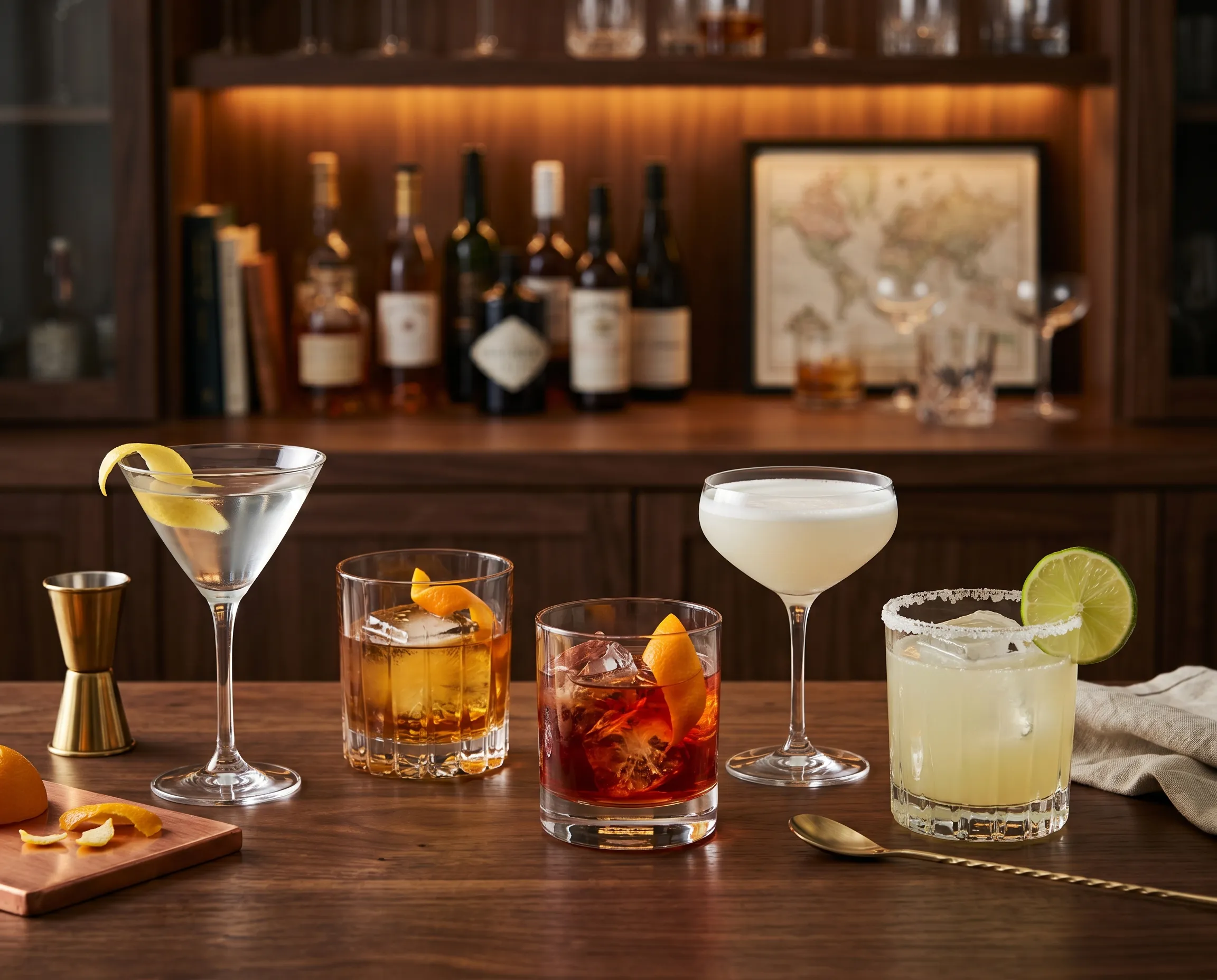
A Daiquiri teaches the sour formula: spirit, citrus, sugar. Once you understand that, a Margarita, Whiskey Sour, Gimlet, and Sidecar all make more sense.
A Manhattan teaches the stirred template: spirit, vermouth, bitters. Once you understand that, a Martini, Negroni, Boulevardier, and Vieux Carré become easier to read.
A Negroni teaches equal-parts balance. A Margarita teaches the role of orange liqueur. A Daiquiri teaches why fresh lime matters. A Martini teaches why vermouth is wine, not shelf-stable liquor.
That is why this shelf works. It is not just a shopping list. It is an education.
The Non-Bottle Essentials
The 10 bottles do not stand alone. Cocktails also need the right tools and the small things that make them work.
Bitters
Angostura first. Orange bitters second. Peychaud's third if you like Sazeracs or New Orleans drinks. Bitters are not optional in stirred classics. They are the seasoning. For the full breakdown, see the two dashes that change everything.
Fresh Citrus
Lemons and limes are not garnish. They are structure. Bottled citrus tastes flat and bitter in cocktails, and it throws off the balance almost immediately.
Sugar
Simple syrup is just sugar and water. Make it yourself. One part sugar to one part water is the standard. Rich syrup, two parts sugar to one part water, is useful once you know what you are doing.
Ice
Ice controls temperature and dilution. Standard freezer cubes are fine for shaking, but spirit-forward drinks served on the rocks benefit from a large cube or clear ice. The bottle gets the attention. The ice quietly decides whether the drink holds together.
What Not to Buy Yet
This is where restraint matters. The bottles below are not bad. Some are excellent. They just do not belong on the first shelf unless you already know you love the drinks that use them.
Essential for a Sazerac rinse, useful in tiny amounts elsewhere, but a narrow first purchase. Buy it when you are ready for Sazeracs and Corpse Revivers.
Beautiful in an Aviation, but extremely specific. Buying a bottle for one drink is how home bars get cluttered.
Wonderful, expensive, sometimes difficult to find, and not the right place to start. The Last Word is worth making eventually. You do not need to begin there.
They solve almost no problems and create very few good ones. If you love vodka drinks, buy a clean, neutral vodka. Skip the flavored shelf.
Unless you use vermouth constantly, buy smaller bottles. Vermouth oxidizes after opening, and a large bottle that goes stale is not a bargain.
The Upgrade Path
Once the first shelf is working, the second shelf gets interesting. This is where you start buying bottles that unlock more specific drinks or deepen a category you already enjoy.
Cognac
For Sidecars, Vieux Carrés, Champagne Cocktails, and brandy sours. A solid VS or VSOP is enough. Save the expensive stuff for sipping.
Blended Scotch
For Rob Roys, Blood and Sands, and the base of a Penicillin. Scotch behaves differently from bourbon and rye, and that difference is worth learning.
Aperol
Lower bitterness than Campari, bright orange, and essential for Paper Planes, Naked and Famous variations, and easy spritzes.
Amaro Nonino or Montenegro
This is where the amaro shelf starts. Montenegro is more flexible and approachable. Nonino unlocks the Paper Plane. Both teach you how herbal bitterness can shape a drink.
Bénédictine
A small pour changes everything in a Vieux Carré, Bobby Burns, or Singapore Sling. It is a specialized bottle, but a very useful one once your basics are covered.
Mezcal
Not smoky tequila. Its own category. Useful in Margaritas, Palomas, Naked and Famous variations, and split-base experiments. Buy it once you know you enjoy the character.
How Much Should You Spend?
Less than you think, but more than the bottom shelf.
Cocktails are not a place for rare bottles, but they are also unforgiving with bad ones. The sweet spot is the reliable mixing bottle: good enough to taste clean and intentional, affordable enough that you are not nervous pouring two ounces into a shaker.
If a spirit tastes harsh on its own, citrus and sugar will not magically fix it. Bad spirits make bad cocktails.
If you would feel guilty mixing it, do not buy it for mixing. A cocktail bottle should be easy to use.
Every category has bottles professionals rely on because they are consistent, fairly priced, and mix well. That is the lane you want.
The Real Point
A good home bar should make it easier to make drinks, not harder.
The first 10 bottles should give you options without overwhelming you. They should help you understand why a Manhattan feels different from a Negroni, why a Daiquiri and a Margarita are cousins, why vermouth freshness matters, and why bitterness is not a flaw but a tool.
Once you understand those patterns, every new bottle has context. You are no longer buying at random. You are adding capability.
Start with bottles that work hard. Use them often. Learn the families. Then add the unusual things because you know what they will do, not because they looked good on a shelf.
That is the difference between owning bottles and having a bar.
If you add these bottles to Alchemy’s My Bar, the app will show you exactly what you can make from what you already have, and what one missing bottle would unlock next.
Common Questions
Start with bottles that unlock the most cocktails: London dry gin, bourbon, rye, light rum, dark or aged rum, blanco tequila, sweet vermouth, dry vermouth, Campari, and orange liqueur. With those 10 bottles, plus citrus, sugar, bitters, and ice, you can make a serious range of classics.
Not at first. Vodka is useful if you specifically like vodka drinks, but it does not unlock as many foundational classics as gin, whiskey, rum, tequila, vermouth, Campari, and orange liqueur. A starter shelf should teach structure and maximize coverage. Vodka can come later.
Usually no. Cocktails need solid, reliable bottles, not rare ones. Spend enough to avoid harsh or poorly made spirits, but do not use bottles you feel guilty mixing. The best cocktail bottles are consistent, affordable, and easy to replace.
Buying interesting bottles before useful bottles. A good home bar is built around coverage: the ability to make a wide range of drinks from a small, intentional set of bottles. Obscure liqueurs and specialty spirits are fun, but they should come after the foundation.